DustRam® King of Dust Free Tile Removal

Dust Free Tile Removal Tools & Equipment

  • Home
  • Tile Removal
  • Learn More
    • Articles/Tools
      • Dangers of Silica Dust
      • DustRam® VS The Competition
      • Evolution of DustRam®
      • Electric Chipping Hammer
      • Flooring Business Advantage
      • Hardwood Floor Removal Services
      • How to Remove Thinset
      • How to Prepare Your Floor For Tile
      • Tile Removal Cost
      • Tile Removal Tools
    • Ahead of the Competition
    • DustRam® VS
      • PulseRam® vs CDCLarue®/Pulse-Bac®
      • DustRam® vs DustCuff™
      • DustRam® vs Dust Commander®
      • ExoRam® vs HHDA™ DemoSled™
    • Premium Territories
    • Legal
    • Patents & Trademarks
    • Tile Removal Equipment
  • Products
    • DustRam® Products
      • ExoRam® Stand Up Tile Removal Tool
      • Metal DustRam® Dust Free Tile Removal Tool
      • Nylon DustRam® Dust Free Tile Removal Tool
      • Pulse-Bac® CDCLarue® 1000 Series Vacuum
      • Pulse-Bac® DustRam® Vacuum Filter Alternative
      • PulseRam® – Auto Self Cleaning Vacuum
      • PulseRam® Self Cleaning Vacuum Circuit Board
    • Affiliate Products
      • Angle Grinder
      • Chipping Hammer
      • Scraping Chisel
      • DEWALT Angle Grinder Tool
      • Electronic Torque Wrench
      • Jack Hammer Kit
      • Makita Angle Grinder
      • Ridgid Dusting Brush
      • Ridgid Wide Floor Brush Accessory
      • Permatex High Strength Threadlocker Red
      • Permatex Threadlocker Blue
      • TEKTON Groove Joint Pliers
      • Triax Wheel Bearing Grease
      • Worm Drive Circular Saw
  • Dust Free vs. Dustless
  • Blog
  • FAQs
  • Videos
  • Join DustRam®
  • Payment Options
  • GET A QUOTE
  • 1.844-DUSTRAM
  • Find A Contractor
  • Return Policy
  • Contact

Importance of Indoor Air Quality in Flooring Removal – Crystalline Silica Dust Edition

September 28, 2022 By DustRam® King of Dust Free Tile Removal 35 Comments

indoor air quality silica dust

The Importance of Indoor Air Quality: Crystalline Silica Dust Edition

The Environmental Protection Agency (EPA) states that indoor air pollution can be 2 to 5 times higher than outdoor pollution levels. In some cases, indoor pollution can be 100 times more dangerous and damaging than the equivalent of outdoor pollution. 

Modern-day lifestyles necessitate spending significant time indoors, so we must take care of our indoor air quality at all times to prevent our health and our loved ones. Follow along with DustRam® to learn about the importance of indoor air quality and the ramifications of exposure to crystalline silica dust from home remodeling projects.

How Does Air Quality Impact Your Everyday Life?

clean air at home

Health and Immunity

High-quality indoor air enhances our health. Given that we spend most of our time indoors, having high-quality indoor air ensures you do not compromise your immune system or normal bodily function. Poor air quality exposes you to particles and air molecules damaging to your health. 

Diseases and Illnesses

As you’ll see below, poor air quality is associated with a myriad of health issues that affect your immune system, respiratory system, eyes, and much more. Ensuring you have high-quality air at home, protects you and your family from such ailments.

Your Life At Home

Whether you’re working from home or relaxing after a long work week, having fresh air flow throughout the house improves your at-home experience. Fresh air enhances your productivity, sleep quality, relaxation, and more. 

Related Post: Crystalline Silica Dust – the New Asbestos of the 21st Century

What Causes Indoor Air Pollution?

Certain Home Remodeling and Renovation Projects
vinyl floor in game room

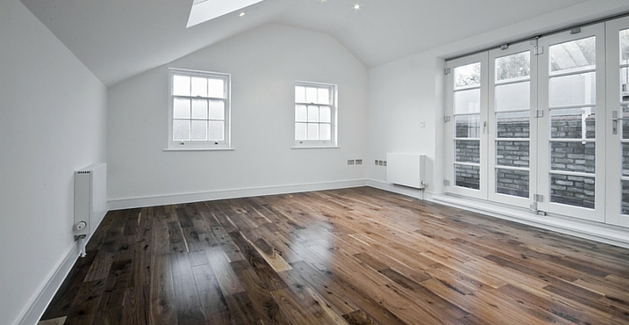
There are many indoor air pollutants to be concerned about but crystalline silica dust is one that is most common in home remodeling and renovation projects. More specifically, during a retiling project, you should be concerned about pollution resulting from the removal through outdated processes.

While there are many sources of indoor pollution, respirable crystalline silica dust associated with retiling the home, is particularly dangerous as they cause serious respiratory-related diseases. Methods like traditional and virtually dustless tile removal release dust back into your home. 

What is Respirable Crystalline Silica and How Will it Affect Your Life?
silica dust created during a tile removal

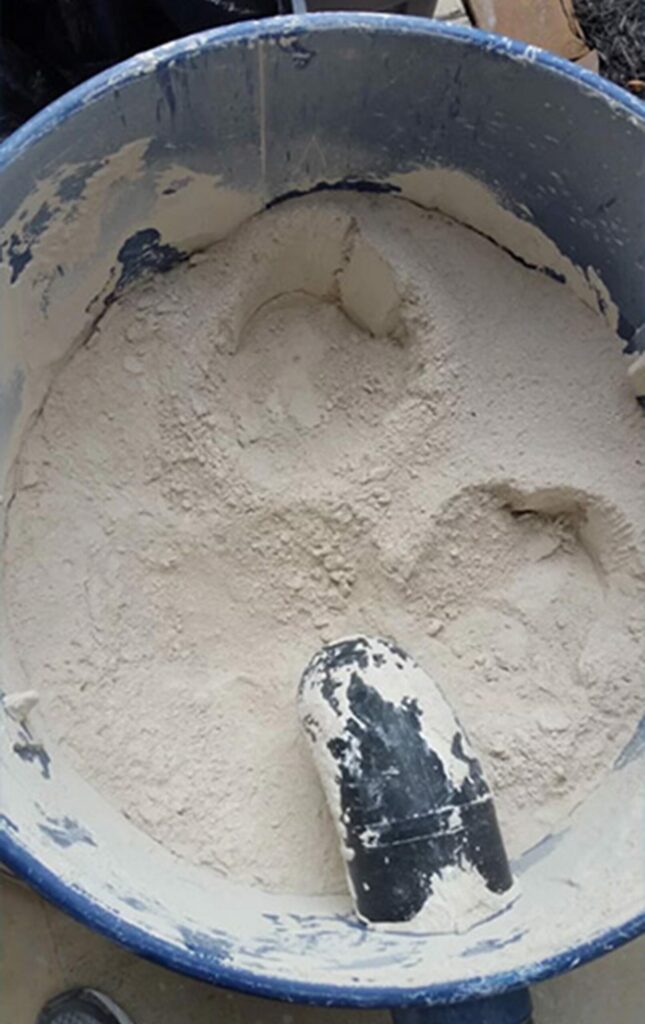
OSHA defines crystalline silica as a mineral found in numerous construction materials, including concrete, stones, sand, ceramics, tiles, mortar, and bricks. The mineral is generally safe to interact with when it’s a material composition. However, when these construction materials are worked on, they the dangerous create dust. This dust exposes individuals around the workplace to carcinogenic silica particles.

In the case of retiling projects, ripping up old tile and clearing the mortar from the base creates and spreads dust around, especially when using inappropriate tool and outdated techniques and methods.

Related Post: The Dangers of Crystalline Silica Dust

How You Can Be Exposed to Respirable Crystalline Silica During a Retiling Project

The US Department of Labor estimates that about 2.2 million people get exposed to crystalline silica dust in the workplace every year. The high number of people exposed to silica dust is due to the wide variety of processes that create the dust at a job site.

Subjecting materials that contain crystalline silica to cuts, chipping, sawing, drilling, crushing, or grinding, produces minute particles of silica dust that are about a hundred times smaller than typical grains of sand. 

These particles of silica are commonly referred to as respirable silica dust. With outdated techniques and processes, contractors are exposing their workers and customers to this extremely dangerous dust. Companies don’t have the proper technology to filter the dust and capture it – to prevent it from touching the air you breathe.

Instead the dust is released back into your home from tens to hundred of pounds. The dust circulates through the home via the HVAC, pervading your belongings and ending up in your lungs.

Health Issues Associated With Indoor Pollution (Especially Crystalline Silica Dust)

dusty tile removal after

Scientists and medical practitioners agree that indoor air quality impacts your health. To be precise, indoor pollution can harm your health and long-term well-being. Depending on the air pollutant in question, indoor pollution can irritate the nose, throat, and nose, cause headaches, dizziness, fatigue, respiratory diseases, and can even cause cancer in the lungs.

In case of crystalline silica exposure, you risk getting silicosis, an incurable condition that affects your lungs by reducing their ability to take in oxygen. Silicosis also causes permanent damage to the lungs. 

When the silica dust becomes lodged into the lungs, the particles cause progressive inflammation and scar the lungs, which can be fatal. Chronic silicosis usually sets in a long period after exposure, typically 10 years later. Symptoms of chronic silicosis include fatigue, a persistent cough, chest pain, and shortness of breath.

According to the CDC, exposure to crystalline silica also causes other serious ailments, including kidney disease, chronic Obstructive Pulmonary Disease (COPD), autoimmune disease, and lung cancer.

As you might appreciate, avoiding the aforementioned ailments and health issues that come with exposure to crystalline silica dust is paramount. That’s why it’s essential to ensure your indoor air quality is never compromised, especially when working on renovations and improvements involving masonry, concrete, tiles, and other related construction materials.

Dust Free Floor Removal is the Solution

Keep Your Family and Pets Safe from the Carcinogenic Tile Dust

pug dog laying on the wood floor

Our main goal is to help our homeowners, tenants, and contractors efficiently remove tiles while keeping the space dust-free. There are numerous benefits to our systems, including:

#1. Dust-Free Removal Process and Technology

Unlike traditional methods of tearing down tiles or the relatively inefficient dustless methods and systems, our dust-free method not only filters but also captures and contains 99.99% of the crystalline silica dust produced while removing tiles. To achieve a truly dust-free tile removal result, our system suctions dust at the source using our technologically advanced vacuums. We do not release dust anywhere near your home. You can rest assured that your household will benefit from 50 times better air quality than permitted by OSHA standards.

#2. Healthy Indoor Space And Air

A notable benefit of our system is the improved air quality, which protects your health. By capturing the dust as soon as it is released, we guarantee that no dust is released into the air. Importantly, no dust ends up on your ceiling, air ducts and vent, clothes, shoes, and, importantly, your lungs. 

#3. OSHA Compliant

Our systems and processes tick all the boxes. We achieve better air quality than is required by OSHA. In fact, our systems will protect you from exposure to silica dust. Not only is our system OSHA Compliant, we exceed it by 50 times. We don’t just filter the dust… we CAPTURE it and that is what differentiates a dust free result from the outdated processes in the industry. 

#4. Cost-Effective Removal Process

Our dust-free processes and equipment have the advantage of being cost-effective. For instance, we do not need to construct barriers to mitigate dust, and our equipment allows us to work much faster. But perhaps the most important cost-saving consideration is the lack of post-clean-up. 

Given that our tile removal processes do not release dust back in your home, you do not have to incur extra costs in the clean-up process. This means no professional cleaning sessions are needed and most importantly, no hospital bills for respiratory diseases.

How Our System Ensures The Tile Removal Process Is Dust-Free Every Step of the Way
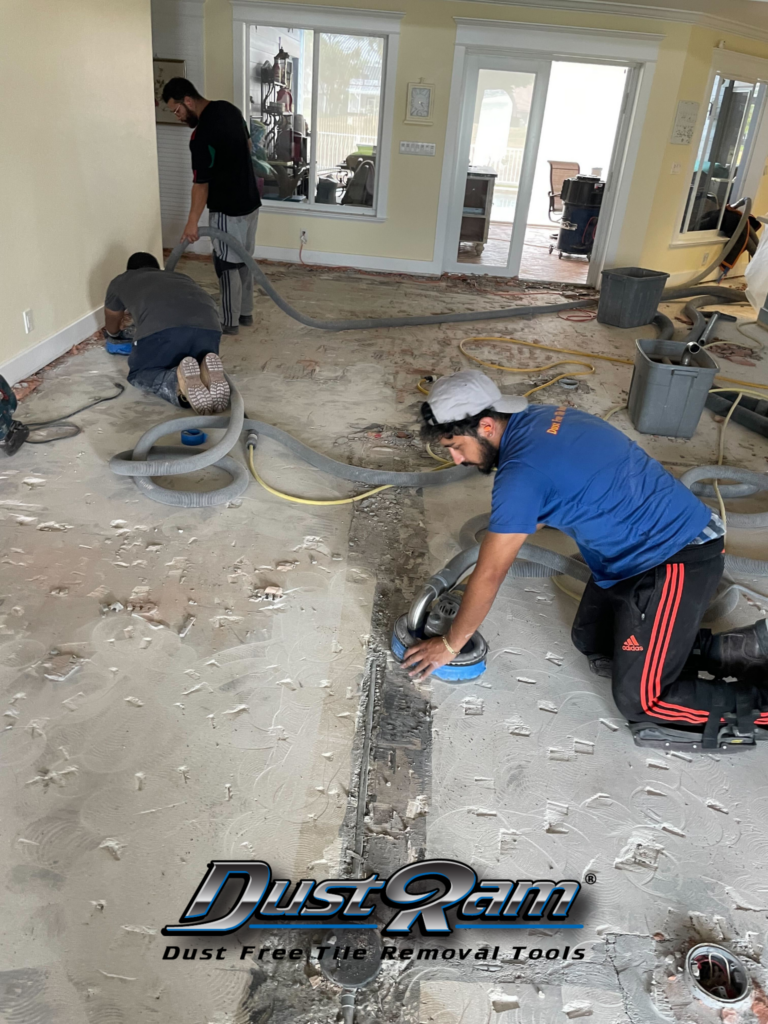
We execute using advanced technologies and processes to achieve a truly dust-free tile removal, thereby ensuring your indoor air quality remains excellent. We fully comprehend the dangers of crystalline silica in the home. As such, we go above and beyond to ensure we capture all the crystalline silica produced while tearing up the old tiles. We will never compromise your air quality.

High CFM

Our patented vacuum system was made for the sole purpose of the capturing the dust to alleviate the stress that came with the mess and exposure. Our vacuums are unlike any others out in the market.

No Need For Manually Purging 

While traditional and dustless tile removal systems need to purge filters frequently  and manually, our system does this automatically every 5 seconds. Waiting for the vacuum to clog up enough to notice a drop in suction, force exposes you to the dust. Our system works continuously, to suction the dust and it is the most efficient technology out on the market.

Our Equipment Collects and Suctions Dust at the Chisel

Unlike other systems, our equipment and methods are designed to capture and suction dust at the moment it is created. We capture silica at the chisel right after it’s been produced, thereby denying the dust opportunity or time to spread around your home. Our approach is more efficient and effective, and we leave your home with clean indoor air. 

Put Your Health First

Put Your Health First. Don't Let Silica Dust Live in Your Home

The importance of quality indoor air cannot be overstated enough. Do not compromise the safety of your family during a retiling project. Work with a team that uses dust-free tile removal methods to keep you safe from crystalline silica dust at bay.

For more related content, the latest news and trends, and more, be sure to visit our flooring removal blog.

Filed Under: Silica Dust, Tile Removal

The Only Guide You Will Need: What Is the Best Kitchen Flooring?

August 10, 2022 By DustRam® King of Dust Free Tile Removal 50 Comments

The Ultimate Guide to the Best Flooring for Kitchens

The Ultimate Guide to the Best Flooring for Kitchens

These are the best flooring options for kitchen spaces in 2022

Installing high-quality flooring in your kitchen is extremely important because this is a common high-traffic area in the home. As such, they undergo significant wear and tear, spills, heat, and constant plodding of the feet. 

It is no secret that not all floors are created equal…

Kitchen floors should be built to last and handle the different elements that are thrown their way. But sadly, the truth is that not all flooring materials are suited for the kitchen. However, there are a variety of kitchen flooring materials that would be fantastic for the kitchen area.

Therefore, we recommend homeowners consider durable options while still maintaining the delicate balance of style, function, comfort, and décor.

This is the only kitchen flooring guide you’ll need on your way to choosing the best flooring for your home.

In this comprehensive guide, we are going to tackle everything you need to know about kitchen flooring. The different types of flooring, their benefits as well as their disadvantages. We will also dive into why it is important for kitchen floors to be waterproof, and much more.

Our goal is to help you make the right choice when it comes to kitchen floors. So let’s dive right in and explore the top kitchen flooring ideas of 2023 and 2024!

THE CONSIDERATIONS

5 key factors to consider when choosing a new floor for your kitchen

It’s important for the floor to resonate with you… What we mean by this is that you must consider what you want, lifestyle, comfort, and anything else related. It all boils down to the five main elements below:

i) Your Personal Style

What style do you want to project in your kitchen? This is a question only you can answer. If you have identified your style sense, the kitchen floor should complement it. There are many kitchen styles, like the popular farmhouse look, rustic, modern, futuristic, and even cutting-edge contemporary. Do not forget to account for colors, patterns, and texture during the exploring stage to make sure you are getting the right flooring for your kitchen space.

ii) Lifestyle

In your kitchen, you are the star of your own cooking show. This means that just like in a restaurant or cooking show, the chances of spilling or dropping something are high. Also, if you have pets, kids, or a large family who often spends their time in the kitchen, we recommend going for flooring that can withstand the test of time.

iii) Comfort

Comfort is essential. If you spend more time in the kitchen stirring, dicing, and slicing, you should consider a kitchen floor that is not only resistant to wear and tear but soft on your feet. For example, if you choose tile, it will certainly last you a long time but it is uncomfortable to stand on for periods at a time. In this case, wood would be an excellent option to consider as an alternative flooring to tile.

iv) Cleaning

Tracked-in dirt and spills make the kitchen floor dirty. In fact, it tends to get grimy. For this reason, we recommend choosing a material that is easy to clean, stain resistant, and water resistant to minimize the time spent on maintenance.

v) Cost

Cost is an important consideration because it influences the type of material you receive and several other factors. Therefore, we recommend having a kitchen flooring budget when planning to remodel. To come up with a kitchen flooring remodeling estimate, consider measuring the total square footage. After this, research the kind of material you need and its cost. Do not forget to include additional costs such as underlayment, delivery costs, installation costs, and even removal and disposal costs. Learn more about dust-free flooring removal to prevent exposure to the cancer-causing silica dust.

By considering all these factors, you will have a better idea of what you want, how to go about it, and the approximate cost to get and maintain the flooring for your kitchen. 

https://www.dustram.com/blog/best-flooring-types-for-pets/

NOW, LET’S TALK ABOUT THE BEST KITCHEN FLOORING TYPES…

The moment you have identified what you are looking for, just remember that there are many options to choose from. Below are some of the best kitchen flooring ideas, benefits, and limitations.

1. Engineered Hardwood

Although it may be a surprise, engineered hardwood is a good material for kitchen flooring. Unlike normal hardwood (which is not intended to get wet), engineered hardwood is an excellent choice because it is not only water resistant but waterproof as well.

hardwood flooring removal

What is Engineered Hardwood?

Unlike normal hardwood, engineered hardwood is a finish of real hardwood that has been attached together to create strand plywood or board. The process makes the product stable and resistant to cracking or warping.

The Benefits:

-Water damage resistance

-They promote authenticity because they are made of genuine wood.

-Easy to the feet

-Have soundproofing capabilities

The Disadvantages:

-Expensive to purchase and install

-Even if they are designed to be waterproof, they do not last long.

-If your kitchen floor is going to undergo a heavy and messy beating, it is important to note that you will have to invest in a serious maintenance schedule.

According to current emerging hardwood trends, in 2023 the market should expect lighter finishes and different varieties. While the cherry and walnut finishes will be somehow timeless and traditional, that is because they will feature lighter and more natural wood colors. Speaking of colors, the variety is a continuity trend, whereby in 2023 various color options are expected to be enhanced, such as dark wood mixed with lighter.

Just like the way we lay patterns for tiles, this is an option that is expected to be popular for enhancing interest. This is a case that we are continuing to see with diagonal and herringbone patterns. For example, mixing plank width has gained in popularity this year. Hardwood is a popular choice for many due to its benefits, recyclability, and environmental friendliness.

https://www.dustram.com/blog/buckling-hardwood-floors/

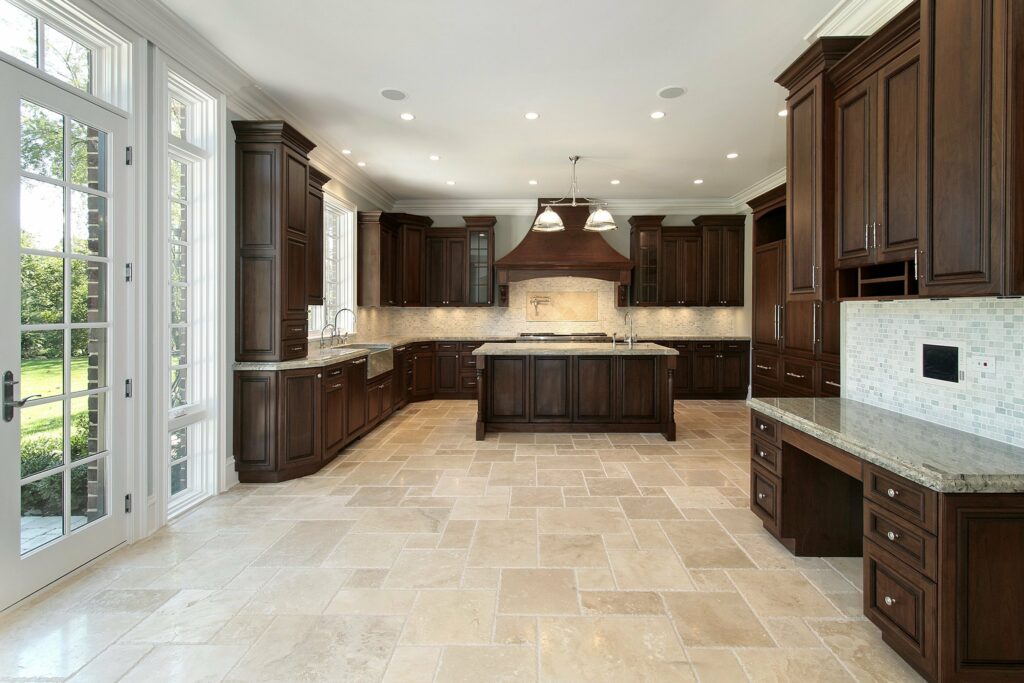
2. Tile Floor

Tiles are flexible, durable, and extremely waterproof. For this reason, they have become the go-to kitchen flooring option for many.

ceramic tile floor in kitchen

The Types of Tiles

A majority of the tiles are made from either stone, porcelain, or ceramic. These are different materials used to make tiles, allowing them to have different properties and outcomes:

i) Natural Stone Tile

Different kinds of stones can be used to make tiles, like limestone, granite, or marble. Each natural stone material offers different properties that reflect the tile-based characteristics. However, the performance is the same.

ii) Porcelain Tile

This material is known for producing very smooth tiles. It is a refined clay that must be fired in a kiln at extremely high temperatures to increase its durability, water-resistant characterization, and stain resistance. Porcelain tiles are an all-around choice for your kitchen that is very affordable.

ii) Ceramic Tile

This type of material is less refined compared to porcelain. Because of this, it is far less resistant to water and staining compared to porcelain tiles. However, this is not a problem because they are rustic, cheaper, and rustic-resistant.

The best thing about tile is that it allows for different colors and patterns. What does this mean? It simply means that if you are looking to have a wood-like finish, there are many tile products that allow for this. Furthermore, tile is easy to install and very affordable. It is an excellent kitchen floor option if you do not have the budget or have a problem choosing between wood and tile.

The Benefits

-Tile is the best choice if you are looking for a scratch-resistant floor.

-They are highly resistant to wear and tear

-Superior waterproofing properties

-Tile is environmentally friendly.

-Installing tiles is simple.

The Disadvantages and Not So Appealing Aspects…

-Because they are water resistant, they are slippery (especially those made from polished stone and porcelain).

-Harmful to joints and the back

In summary, tiles are the best option for your kitchen, especially if the kitchen receives high traffic.

https://www.dustram.com/blog/signs-to-replace-your-flooring/

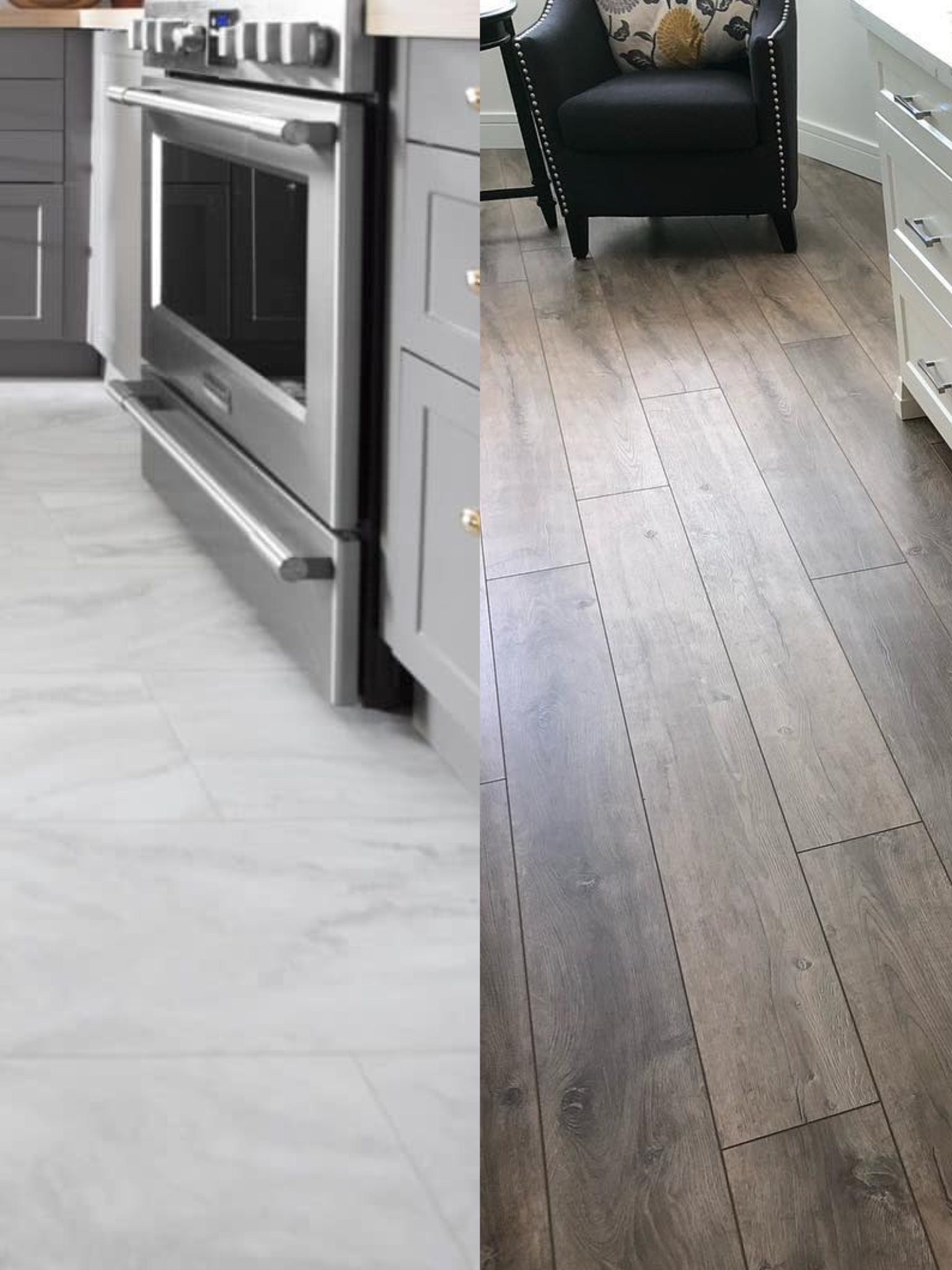
3. LVT/LVP (Luxury Vinyl Plank and Tile)

lvp lvt kitchen floors
Photo Credits: ChrisLovesJulia and Mannington

These are multilayered forms of PVC flooring that are durable, waterproof, and affordable to install and buy. This is an excellent option compared to traditional options like solid hardwood. The best part about luxury vinyl is that it comes in both tile (LVT) and plank (LVP) forms. They look convincingly like stone or wood. The vinyl plank flooring is flexible and can be installed easily.

Do not forget the fact that they are the best if you spend most of your time standing up in the kitchen. In fact, the upgraded versions of LVP and LVT come with enhanced core layers known as EVP (a rigid core luxury vinyl). The layer helps one to stand easily for long periods of time without harming the feet and can withstand wear and tear. 

NOTE: Many people mistake LVT and LVP for peel-and-stick vinyl plank flooring. It is important to note that these are two different products. The peel-and-stick vinyl is not durable, and it is often considered a temporary solution. In other words, it is not the best option for long-term kitchen flooring. Learn about the differences between LVP and LVT. 

The Benefits

Because of its effectiveness, it is one of the oldest flooring options.

-Less expensive than hardwood

-Various designs are available

-Completely waterproof

-Comfortable

The Unappealing Side to LVT and LVP Floors

-They are not eco-friendly (they are made from plastic).

-Not all brands are created equal (there are numerous duds on the market).

-Do not have the best market reputation

NOTE: If you get a good brand (through a professional recommendation), you will experience no problems with luxury vinyl planks or tiles.

https://www.dustram.com/blog/lvt-vs-lvp/

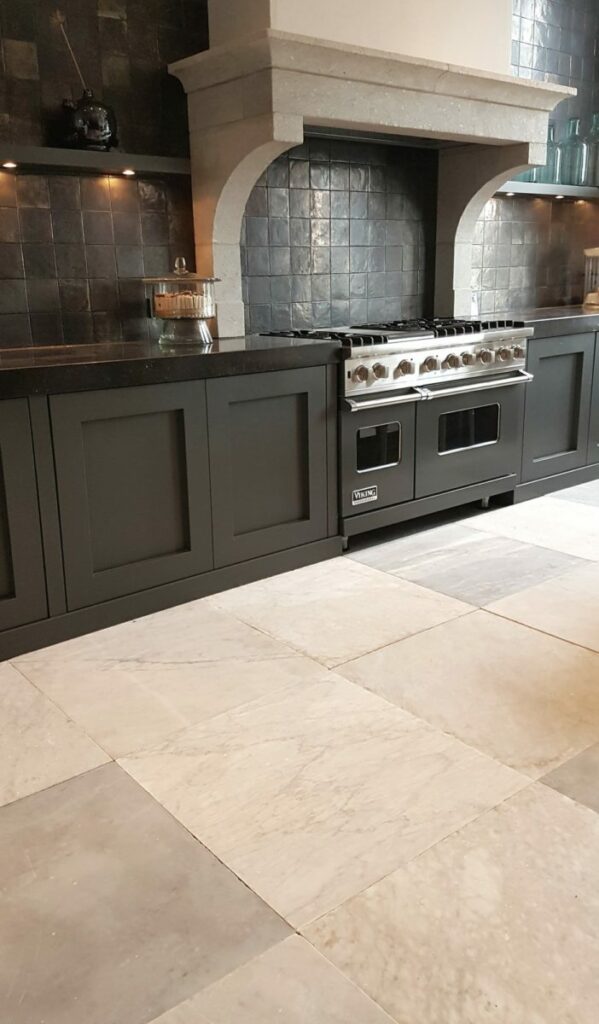
4. Natural Stone

Photo Credit: Piet Jonker

This is another popular and durable kitchen flooring option. This type of flooring is the oldest form of housing flooring on the market. Today, natural stone signals luxury. It attracts buyers when one is selling their home.

Related Content: Should I Replace My Flooring Before Selling My Home?

Types Of Natural Stone

There are many types of natural stones whereby each offers different properties like durability, scratch resistance, and hardness. A few examples include: –

i) Marble 

This type of natural stone is known for its elegance. It comes with unique veins. However, when marble is polished, it may stain and scratch easily.

ii) Limestone

This type of natural stone is attractive and soft. Because it is soft, it can be used as kitchen flooring in low-traffic areas.

iii) Granite

This natural stone is available in tiles and slabs for countertops. Granite is not only durable but also comes with unique and attractive veins.

iv) Slate

One of the most sophisticated stones available. It can last for years if maintained and sealed properly.

v) Sandstone

Sandstone is well-known for its multicolored beauty. It is not as durable, which is why it is mostly used for kitchen countertops.

vi) Travertine

This natural stone is known for its Old-World appearance. Just like sandstone, it is not the longest-wearing natural stone on the market.

The problem with natural stone is that it allows water to pass through. Because of this, it can stain easily, which is a problem in the kitchen. Therefore they demand proper maintenance. In fact, it is wise to apply a penetrating stone sealer every year to create an invisible coat to protect the stone. The sealer needs to be reapplied often.

https://www.dustram.com/silica-dust/

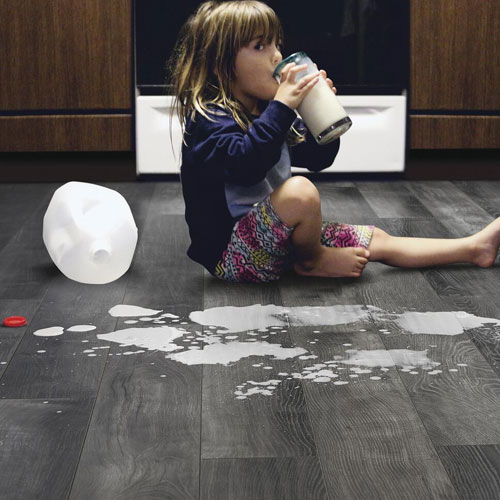
5. Laminate

water resistant laminate kitchen flooring
Photo Credit: Menards

If the right conditions are met, laminate can be one of the best kitchen floor ideas for you. Although laminates are quite popular in kitchen floor ideas, many people confuse them with engineered hardwood.

That leads us to the million-dollar question… what exactly is laminate flooring?

Well, in a nutshell, laminate flooring, a key player in kitchen floor ideas, is similar to engineered hardwood because they are both wood-based composites. However, the difference is that it is mostly fiberboard and appears to be similar to plywood. That is where the similarity between engineered hardwood and laminate ends. The laminate is protected by a durable layer. Laminate tile, often considered in kitchen floor ideas, can be designed to look like almost any material.

Laminates are sold as a less expensive substitute for engineered hardwood, making them an attractive option for kitchen floor ideas. Therefore, it is paramount that you choose one that is water-resistant. Consider laminate products like AquaGuard laminate because they are waterproof and will not disintegrate with exposure to liquids, making them ideal for kitchen floor applications.

The Benefits

-They are waterproof (a collection of RevWood from the product Mohawk laminate is excellent at keeping water at bay)

-They work similarly to LVP and LVT with a wide range of styles

-It is affordable to install laminate floor compared to real hardwood

-Laminate does not contain harmful products to the environment or people

The Disadvantages of Laminate

-You have to identify the best on the market

The truth is that when it comes to laminate flooring, the experience is a bit of a rollercoaster when it comes to finding the right supplier and product. However, our recommendation is to invest in something that is humid-resistant. 

6. Sheet Vinyl

Sheet vinyl is the best choice for your kitchen flooring if you are on a budget. This flooring type was quite popular in the 1960s and 70s and still survived the innovation and upgrade of LVT and LVP. Sheet vinyl is a single sheet of plastic known for its durability and ability to withstand wear and tear. However, it is important to note that it is not as durable as LVP and LVT options.

sheet vinyl flooring
Photo Credit: Armstrong Flooring

The Pros

-Very affordable

-It is waterproof

-Come in various designs (for example wood-like). However, we will not go into its authenticity

-They easily stick to tiles

-Available in different patterns

The Cons

-They are not intended to be flashy

-Do not last as long. They are durable enough to handle light traffic without issues.

-Difficult to install without training (one has to cut its size and lay it down carefully)

-If installed poorly, bubbles will form or it will wrinkle

-Harmful to the environment

7. Cork

cork kitchen flooring
photo credit: icorkfloor

What is cork flooring? Why is it a good kitchen floor? Well, cork flooring is made from the same material that is used for capping wine bottles. The best thing is that they are natural, wood-like substances that are extracted from the cork tree. This substance can also be used for insulation or correcting the flooring slop.

When the substance has been extracted from the cork tree, it is powdered, boiled, and then mixed with a natural resin before being shaped into sheets, tiles, or planks.

The Benefits

-It is an eco-friend. Cork is beneficial to the environment because it is naturally sourced and produced by a cork tree.

-Cork flooring comes with a springy feeling

-It can be styled in many ways

-If installed properly, it will remain waterproof and durable for many years

The limitation

-Cork flooring demands constant maintenance

-Exposure to liquid will completely destroy it

-One has to apply sealant regularly as well

-Many big box store cork flooring options are often not well made

-Cork flooring is not appealing to home buyers and may hurt the resale value of a property.

8. Concrete

concrete floors in the kitchen space
Photo Credit: Craftsman Concrete Floors

Concrete is the mother of kitchen flooring. Because of this, it is also considered to be the best option for basements. The surface of concrete is not only durable but also cheap to make, easy to clean, and extremely waterproof. In fact, concrete is an option for many people who are on a budget and looking for something that is steady.

The Types of Concrete Flooring

It is important to note that there are several types of concrete flooring. What does this mean? It simply means that you do not have to keep your concrete kitchen flooring blank. You have the option of polishing, painting, and texturing it. You can make concrete flooring that looks like wood or tile. The options are unlimited and based on what you want.

The Benefits

-Concrete floor is easy to install

-With some exceptional, concrete is fairly inexpensive

-Concrete is highly durable and waterproof (it is extremely durable and waterproof to the point where it is used in business establishments and dams).

The Limitations

-Once settled or dry, you cannot pamper it anymore without destroying it

-Concrete floors are not comfortable to the touch of the feet, joints, and back

-They cannot be purchased at the store. This means that for you to have a concrete floor, you can either DIY it or call a professional.

-You cannot install concrete on a non-concrete subfloor

9. Solid Hardwood

kitchen hardwood flooring

Solid hardwood can still be used or installed in a kitchen as the floor. In fact, it is the easiest and most convenient option. However, it is important to note that installing solid hardwood flooring demands care and regular maintenance. Remember, installing solid hardwood in the kitchen will be no different from installing it in the bathroom. The best thing is that there are many coatings available on the market that you can take advantage of. The wood coating will turn the regular hardwood into a water-resistant floor.

Solid hardwood gives off a timeless and attractive look. All you have to do is find the best brands on the market. Do not forget that solid hardwood (not engineered) demands constant maintenance.

The Benefits

-Solid hardwood gives you different options. In other words, there is so much you can do with it.

-Hardwood tree species such as oak or hickory offer some degree of water resistance. This means that an ordinary spill is not lethal or harmful as long as it is dealt with immediately.

-Offer an excellent appeal

The Limitations

-Solid hardwood is not the best option if your kitchen experiences high traffic.

-Solid hardwood does not handle regular kitchen spills and heat (temperature swings) well

-Expensive to maintain

-Expensive to buy and install (even installing the most common type of hardwood – oak wood can easily double in price compared to what you would use while installing laminate or LVP/LVT)

The good news is that there are ways to counter the limitations. The only way to do this is through regular maintenance and constant refinishing. We recommend hiring a professional to install solid hardwood for you because it is super challenging to install.

10. Bamboo

Photo Credit: photo credit: ambientbp

Bamboo kitchen flooring falls under the same category as solid hardwood. A bamboo kitchen floor can be installed but will demand high maintenance. Moreover, you will need to be careful with liquids and environmental changes. Nevertheless, it is a great alternative to solid hardwood.

Types Of Bamboo Flooring

Bamboo flooring comes in three different types. These are:

i) Engineered bamboo 

Engineered bamboo flooring, like engineered hardwood, is made up of bamboo planks that have been topped with a layer of durable and water-resistant coating.


ii) Strand Woven

This is the most expensive yet durable solid bamboo flooring. Strand woven is made of pulped bamboo that has been pressed to create dense blokes of material.

iii) Solid bamboo

This type of bamboo flooring is processed by bonding slices of bamboo together. The end product is solid bamboo that can be ideal for your kitchen.

It is important to note that bamboo flooring may be more expensive than hardwood. Moreover, it is quite difficult to refinish because it does not have a natural grain direction. Although refinishing the bamboo flooring may be possible and may demand the services of a professional, it is still a good option. Engineered bamboo, according to our findings, handles the factors found in a kitchen better than solid options. As a result, the benefits and limitations of bamboo are similar to those of hardwood.

The Benefits

-Eco-friendlier compared to hardwood. The primary reason why people will prefer bamboo over hardwood is the level of its environmental friendliness. They behave similarly to hardwood but are harvested after a few years compared to decades with hardwood.

-Completely natural

The Limitations

-Just like hardwood, it needs constant care, maintenance, and refinishing.

-Bamboo flooring is not in abundance

-They are expensive

NOTE: Aside from these limitations, bamboo is a great kitchen flooring option.

11. Linoleum

Photo Credit:LOOK Photography - UpperCut Images - Getty Images

The last and final kitchen flooring type is linoleum. Linoleum is made from natural materials and can easily be compared to laminate. In fact, people confuse linoleum with sheet vinyl because they look and feel relatively similar. If you compare linoleum with laminate, you will immediately identify that the two have different structures. On the other hand, unlike sheet vinyl, linoleum is made from linseed oil, natural fillers, and different resins.

NOTE: Although linoleum is not completely waterproof, with the help of a proper coating, it can be. It is friendly to the environment, and it is among the oldest flooring options. In fact, it was invented in the early 1900s.

The Benefits

-It is durable and affordable.

-It mimics other floor types

-It is biodegradable

-It can be sealed like cork flooring to improve its water resistance capabilities

-It is soft to the foot, joints, and back

-It can be produced sustainably

-Can be installed in a floating style

The Limitation

-It is not water resistant without being sealed

-The money you save will go to maintenance, installation, and making it water resistant

-It can be ruined easily during installation

-It is harder to find linoleum

-Comes with a limited number of styles

THE FREQUENTLY ASKED QUESTIONS (FAQs)

Now that you know the best kitchen flooring types, let’s go over some of the frequently asked questions.

Question: What is the most durable kitchen flooring?

Answer:  Concrete

Technically, concrete is the most durable type of kitchen flooring. Not unless you walk with a jackhammer on your kitchen floor, in which case there is nothing that can break it. The second best durable flooring is LVP and LVT. The best thing about them is that they offer more styling options compared to concrete.

Question: Can I Install a Flooring in A Floating Style?

Answer: Yes

It is possible to install kitchen flooring in a floating style. However, it is important to note that it is highly important to install it perfectly and protect it against moisture and liquid. Do not forget that good kitchen flooring is designed to be waterproof and stain resistant. With the floating style, it can be difficult to install them properly by yourself. Therefore we recommend speaking to a professional for help. (Go through our guide if you do not know what a floating floor is)

Question: Which is the easiest kitchen flooring to clean?

Answer: LVP/LVT

Out of all the kitchen flooring types mentioned in this guide, the easiest to clean is the LVT/LVP (luxury vinyl planks and tiles). That is because it is made of plastic, which makes it resistant to stains. Of course, it is easy to clean concrete flooring, but it can be stained. As we have mentioned in our kitchen flooring guide, the best floor should not only be durable but resistant to water and stains.

Question: Can Flooring Go Under Cabinets?

Answer: It depends.

Installing kitchen flooring that goes under cabinets is unnecessary unless you plan to install or reinstall the cabinets later. On the other hand, kitchen flooring surfaces like tile and concrete can support the appliances and cabinets. However, when it comes to floorings like LVP or LVT, they are not meant to carry a lot of weight for a long time. Therefore, the whole thing will depend on many factors, such as the flooring itself, your preference, and more. Just take your time and identify what you need.

Question: Are luxury vinyl tiles and plants good for my kitchen?

Answer: Yes

Brands like Pergo Extreme and Proximity Mills have high-quality luxury vinyl tiles and planks. (To better understand these products, check out our Pergo Extreme review). You will clearly find that these products are the best flooring for the kitchen. In fact, they are a good all-around flooring solution for your home. Therefore, if you had doubts about LVT or LVP, do not worry because they are the best.

Question: What is the newest trend in kitchen flooring?

Answer: Many new trends in the kitchen flooring world!

Its great news is that so many new trends are taking place in the world of kitchen remodeling and flooring. For example, different types of wood flooring have started to pop up in kitchens. On the other hand, protective coatings and engineered wood have increased in popularity. The LVP/LVT offers timeless options.

Question: What is the most popular kitchen flooring?

Answer: Fake wood flooring

Popular among people are vinyl planks and tiles that look like real wood, while other classic options are also popular. That is because they are not only effective at keeping water at bay, but also offer some level of appeal to a home. 

Question: Is It a Good Idea to Install Laminate Flooring in My Kitchen?

Answer: Only if you are willing to put in the work

Remember, laminate flooring is not waterproof like many other flooring types. However, using sealing products, you can make it waterproof. Therefore, the question is, are you willing to put in the work to constantly seal it? Are you ready to hire a professional regularly to help you with this process? If the answer is yes, then laminate is an excellent flooring solution for you. In fact, we recommend investing in high-end laminates such as AquaGuard and Mohawk’s RevWood laminates. We do not recommend installing laminate that is not waterproof.

Question: What kitchen flooring company do we recommend?

Answer: N/A

We do not endorse any company. We mention things as they are based on our experience. For example, we recommend going to local flooring stores rather than the big box stores. That is because local stores tend to have more quality products than big box stores. Moreover, with local stores, you will get different expert opinions and advice based on your needs.

Question: What should I put on my floor?

Answer: It depends on you.

There are many things you can add to your kitchen flooring. It all depends on what you are looking for and want to achieve. With this in mind, we have some recommendations. First, do not place anything that will make your floor slippery. This is a bad idea, especially if you cook often. You do not want to slip while cooking. Secondly, consider adding some mats. They are popular for a reason. Mats make the kitchen floor safer by eliminating slippage.

Question: What is the best flooring for both my kitchen and living room?

Answer: Waterproof laminate and vinyl planks.

Waterproof laminate and vinyl planks are the best options for both your kitchen and living room. That is because it offers a balance of both performance and comfort. With these options, you will never have to worry about spills. Moreover, they come in different styles, like the classy hardwood style.

Question: What is the best flooring for a small kitchen?

Answer: It does not matter.

In this case, the type does not matter, because everything depends on you (what you want and plan to achieve). The only advice we can give is that you should consider choosing flooring with bigger or wide tiles or planks. This will make the small kitchen feel bigger.

Question: What is the best kitchen flooring for high traffic?

Answer: Concrete and vinyl flooring

Concrete and vinyl are both excellent choices. Classic tiles come in second when it comes to high-traffic kitchens. However, we would choose vinyl over concrete because of the comfort it provides. Remember, although concrete is extremely durable, it is not comfortable.

Question: What amount will it cost to replace kitchen flooring?

Answer: $3 – $10 per square foot 

The truth is that replacing kitchen flooring is not cheap. It will depend on what you are looking to achieve. For example, snapping together cheap products will make replacement easy, fast, and cheap, but at the same time, they will not last. On the other hand, labor-intensive options will cost you a lot of money, time, and effort; but the outcome will last a long time. Therefore, coming up with an accurate estimation is difficult. The average cost is typically $3 to $10 per square foot. That is because, aside from the type of flooring you have chosen, you will have to account for the removal of the existing floor, disposal amount, installation costs, and more. The best way to get an accurate estimate is by contacting an experienced kitchen flooring contractor.

Question: Should I hire a professional or DIY?

Answer: Let us expound!

When it comes to kitchen flooring installation, many factors come into play. All these factors revolve around three primary groups, the contractor, yourself, and the type of flooring. When it comes to the contractor, one has to look at the work they deliver, their skill level, delivery, professionalism, access to flooring materials, and much more. These factors also apply to you. When it comes to the material or type of flooring, there are those that are simple to install and do not need any particular skill, while others demand high-level skill to achieve a perfect outcome.

Therefore, one has to look at their level of ability before attempting a DIY project. Without knowledge or skill, you may turn a simple installation project into a nightmare and make it expensive. We recommend people undertake DIY projects when the project itself is small and the end results do not really matter that much. Therefore, since kitchen flooring projects are often bigger projects, we recommend seeking the services of a professional. Do not take the risk.

On the other hand, floating vinyl plank flooring is easier to install compared to glue-based vinyl plank flooring. That is because, with the glue-based vinyl plants, you will be required to click the planks together carefully to get the best result possible. It is wise to note that a majority of companies void their product warranties when the installation is a DIY project. That is because they will claim that the problem is with you and not their product. Because improper installation can ruin flooring, many companies are discouraging DIY projects in favor of seeking the services of a professional installation contractor.

Do not forget that if the subfloor is not perfect, you will be required to repair or find a floor that can accommodate the imperfections. In a nutshell, DIY projects are good when you have the knowledge and skills to work on them. Moreover, it is perfect when the project is small. Otherwise, always consider seeking the services of a professional.

Summary

With all this information, you may wonder, what is the best kitchen flooring for me? Well, everything comes down to you. In other words, what do you plan to use? What do you plan to achieve? What is your budget? What is your flooring maintenance schedule? All these are factors that will influence the flooring you get.

To us, vinyl planks and tiles score the highest across different areas. For example, it is durable, comfortable to walk on, water resistant, stain resistant, and can handle high traffic. If you do not mind the work that comes with maintaining high-profile kitchen flooring, then we recommend engineered or solid hardwood, mainly because of its beauty. If you do not love the work and prefer the traditional option, then you can choose tiles. In fact, tiles are popularly used as kitchen flooring.

Let’s not forget the others. They all have something to offer. If you are still on the fence regarding the best kitchen flooring to choose from, consider going to your local flooring store. While there, you will receive all the relevant information and advice from a professional. Always consider going for top-rated flooring options. Do not forget to seek the services of a skilled and experienced flooring expert for your project. Do not risk it. You never know, you may get the best deal.

If you are ready for your new floor, make sure to first find a DustRam® Certified contractor that can remove your flooring without the dusty mess. We guarantee dust free results, better floor prep, and quality work.

Filed Under: Flooring, Tips

What Flooring Types Are Best for Pets?

June 3, 2022 By DustRam® King of Dust Free Tile Removal 74 Comments

Choose the Right Floor for Your Dogs

choose the best flooring for dogs

The Best and Worst Options

Finding the right type of flooring if you are a pet owner is extremely important because you want to choose one that will last! Finding a floor that both fits your personal style and accommodates your four-legged friend/s may seem like a huge challenge. But fret not as there are many options available that will work just fine for everyone. 

Follow along with DustRam® for a breakdown of what to account for and why it is important to have the right type of flooring for your dog.

🐾

🐾

🐾

🐾

Important Flooring Factors to Consider

best floors for dogs

First, you will want to get familiar with your breed and understand the kind of lifestyle your furry friend requires. Some breeds are easier to train than others making accidents more common in certain breeds compared to other ones.

Understanding your four-legged friend’s lifestyle helps pinpoint what they prefer and how they move around on the flooring. This can often dictate which direction you go in as a dog owner.

1. Resilience

Start with how resilient the flooring is. Is it going to do well when handling the dog’s nails scraping across its surface throughout the day?

2. Maintenance

You will want to go with a type of floor that is easy to maintain. Having to repair it every month is going to ramp up the bills and not be worth it. A good floor should be maintained.

3. Water-Resistance

It is not ideal to have dog pee on the floor, but it can happen. Therefore water resistance is a must, or you are going to have significant staining on the floor along with damage. It is best to go with flooring that can withstand dog slobber and urine.

4. Comfort

Comfort does matter. It is important for a dog to enjoy walking on the surface and feel safe too.

5. Pricing

You are going to be on a budget and that does play a role in the direction you go in. Look to set a budget and then pinpoint which features matter to you while deciding.

🦴

🦴

🦴

🦴

https://www.dustram.com/blog/water-damaged-tile-flooring/

6 Great Flooring Options for Dogs 🐾

1. Tile Floor

Tiling is a common option that is seen around the world. It works. It is resilient, easy to maintain, and does not breakdown at the first sign of urination. This is good for those who have a dog that has a loose bladder. You can easily wipe the tile and it will be good to go. This ensures everything is easier to manage and looks good throughout the day too.

The only issue with this type of flooring would be how cold it feels. This might be difficult for the dog to walk in during the colder times of the year. It is also a harder material rather than a softer one like carpet. If you are thinking about going down this path, then it is best to look at porcelain tiles. These work well in providing additional durability and water-resistance.

Ceramic tile would also be a great option if you are disinterested in porcelain tile. There is a wider selection to choose from inside the realm of ceramic tile flooring. But unfortunately, this material is not nearly as durable as porcelain.

Related Content: Should You Replace Your Flooring Before Selling Your Home?

2. Vinyl Floor

Vinyl has been around for a long time and is quite resilient as a flooring type. It is also water-resistance and budget-friendly too. This makes it a good choice for dog owners. You can get a comprehensive wooden appearance with vinyl flooring while knowing it will last for a long time. This makes it ideal for those who want a premium finish.

There are two options available to you – luxury vinyl planks and luxury vinyl tiles.

– Luxury vinyl planks are designed to look like hardwood floors. They are soft to walk on in comparison to the tiles.

– Luxury vinyl tiles are designed to look like tiles and maintain the same shape too.

With this type of material, you are getting something that will look immaculate and last for a long time. Vinyl flooring does well with pets. Vinyl is also easy to clean and gives you ample options to choose from.

3. Laminate Flooring

This is a type of floor that is specifically designed to last longer compared to other options that exist. Laminate is a great flooring option for both for dogs and humans. You will notice how well laminate performs when it comes down to the scratching from your four-legged friend. Laminate tile also looks like vinyl and has the finishing you seek when it comes down to the texture. While it might not have much traction, it is still a solid flooring type to consider.

It is important to think about water damage with this flooring type. It is not as waterproof as the others. This is a con that you may want to weigh in when making your decision on the best flooring type for pets. Laminate is still rather easy to clean and does well against staining on the upside.

4. Engineered Hardwood Floor

If you are thinking about going for something that is close to hardwood, then this is one option available to you as a property owner. The idea here is to go with something that has a thin layer of hardwood at the top and mimics the look you are going for.

This type of wood lasts a long time and is simple to clean. However, it is not water resistance either and exposure may result in the buckling of your floors.

Related Content: Buckling Hardwood Flooring: Causes, Prevention, and Repairs


5. Bamboo Flooring

This is a unique flooring type to consider because it works like a charm in dog homes. The look of bamboo flooring is close to hardwood, and it lasts a long time too.

This type of flooring works because it is robust and easy to maintain. This makes it an excellent choice for regular use and high-traffic areas. However, it does not do well with moisture, but good maintenance will take care of that for you!

6. Cork Flooring

This is another fantastic flooring material that does well with dog homes. It is antibacterial and it is also good against mold, which makes it a good option for homes that are typically exposed to vast amounts of moisture. Cork is also easy to clean if your dog relieves itself on the floor at any given point.

The reason cork flooring is a functional option for homes with pets has to do with how soft it is underneath the paws. This makes cork ideal for the dog or other animal friends to walk on and it will also help lessen the pressure on their joints during the day. However, it is easy to puncture, which is not ideal due to a dog’s nails.

https://www.dustram.com/blog/signs-to-replace-your-flooring/

Which Floor Types Are Not Ideal For Pets?

1. Carpet

Carpet is one option that is common in most homes, but it will not yield the results that you want. It is important to think about going with a flooring type that is easy to clean and won’t stain so easily, which is not the case with carpeting.

Carpets stain rapidly and will damage to the point of no return if accidents are not controlled or somehow prevented.

While the carpet is soft underneath the paws, this does not mean it is going to age well with dogs around. Dogs will leave quite a mess on carpets and that can start to leave a lingering odor that is not appealing to the nose.

2. Hardwood

Hardwood is a flooring type that is aesthetically pleasing and has been around for quite some time. However, this is not a good option for a home with a dog. The reason has to do with it not being able to sustain moisture and that causes it to get damaged quickly. It is also not good with scratching and can get damaged over time more easily than other flooring types out there.

For those who do want to go down this path, look to go with the hardest wood type on the market. This will at least protect it from scratching as soon as the dog walks on it.

How To Keep the Floor Safe?

pug dog laying on the wood floor

1. Clean Any Moisture Immediately

Let’s assume the dog is walking on the floor and urinates. This is one of the more common aspects of owning a dog and it is not a pleasant issue to navigate around. However, if you act fast, you are going to lessen the damage regardless of the flooring type.

2. Keep the Dog's Nails Short

Longer dog nails are a real concern. You don’t want the dog scratching everything just by walking around. This does happen when the dog’s nails are not kept in check. You must stay on top of this to ensure things are done the right way.

3. Keep the Dog's Eating Area Clean

This is where most of the mess is. You want to reduce damage to this area by placing mats and keeping them as protected as possible. This will ensure any food or water that gets onto the flooring goes onto the mat. It should not fall onto the floor at any point.

4. Vacuum and Mop Often

You should create a schedule when it comes to vacuuming and/or mopping the floor. The goal is to ensure everything is removed from the flooring as soon as possible. Remember most of the damage that is done to the floor happens after 5-10 minutes are gone.

You will want to act fast and make it a habit. This is how you are going to see the type of results that will bring a smile to your face.

🐾

🐾

🐾

🐾

Ready to Replace Your Flooring?

Hire Dust Free Floor Removal Services by DustRam® for the Best Results

If you are ready to replace your current flooring with a more dog-friendly option, hire DustRam® for your dustless tile removal services. We capture 99.97% of cancer-causing tile dust preventing exposure in your home. Contact us today to learn more about our services or to get a free quote.

Filed Under: Flooring, Tips

Case Study: 597 Square Feet of Dust Free Tile in Cooper City

May 18, 2022 By DustRam® King of Dust Free Tile Removal 73 Comments

cooper city florida tile removal

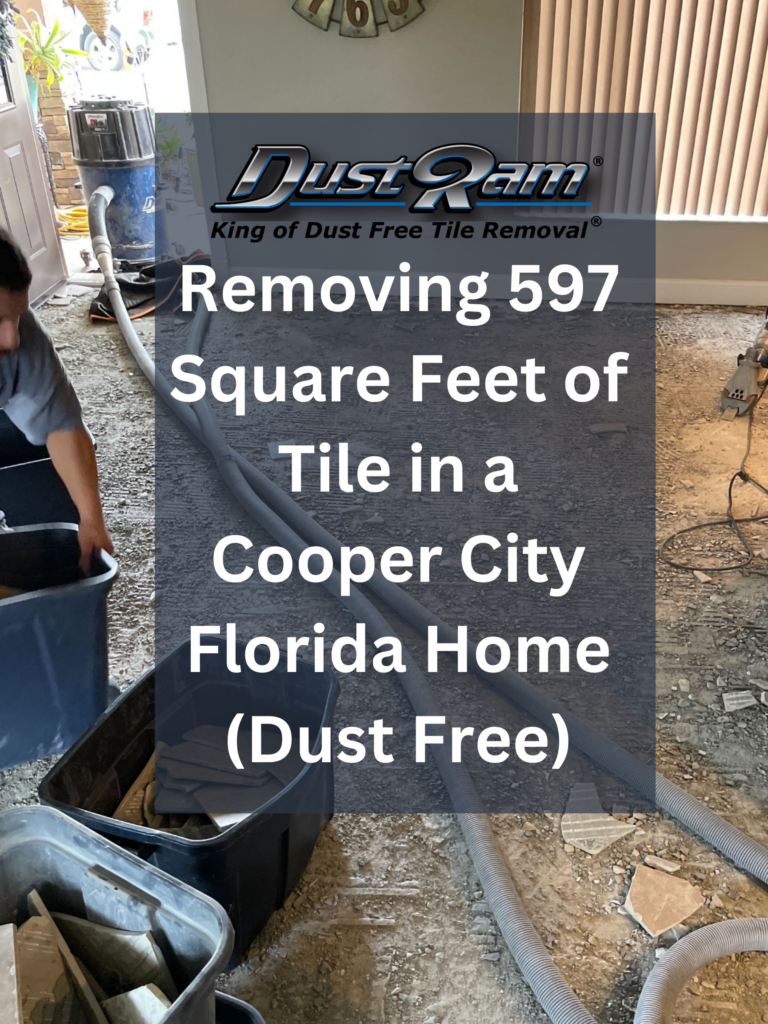
Removing 597 Square Feet of Tile in Cooper City, FL

DustRam® Tackles this Residential Job the Dust Free Way

Cooper City is a city in Broward County, just 15 miles southwest of Fort Lauderdale, Florida. Cooper City was first established in June of 1959 by the Special Act of the Florida Legislature. This city has gained popularity over the years for being a wonderful place to grow families. This year,  DustRam® had the pleasure of working on a 597 square ft project in a Cooper City home. Our team removed tile dust free in the dining room, kitchen, and bedroom areas. Follow along with DustRam® as we guide you through one of our Florida projects!

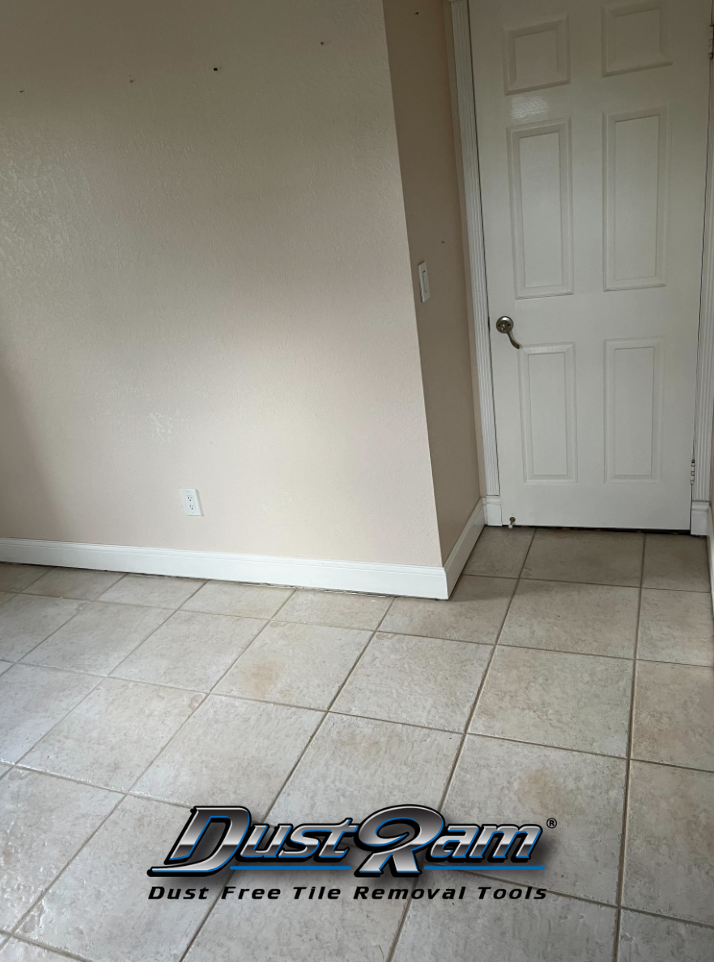
Before the Tile Removal

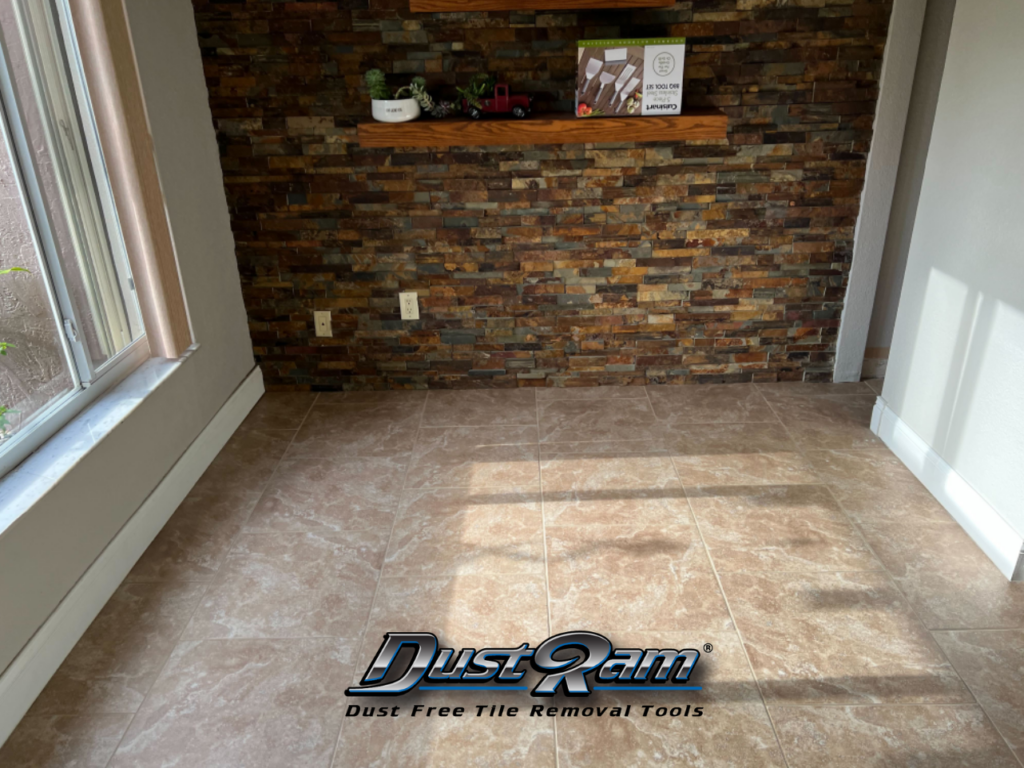
The Dining Room

floor removal contactor near me

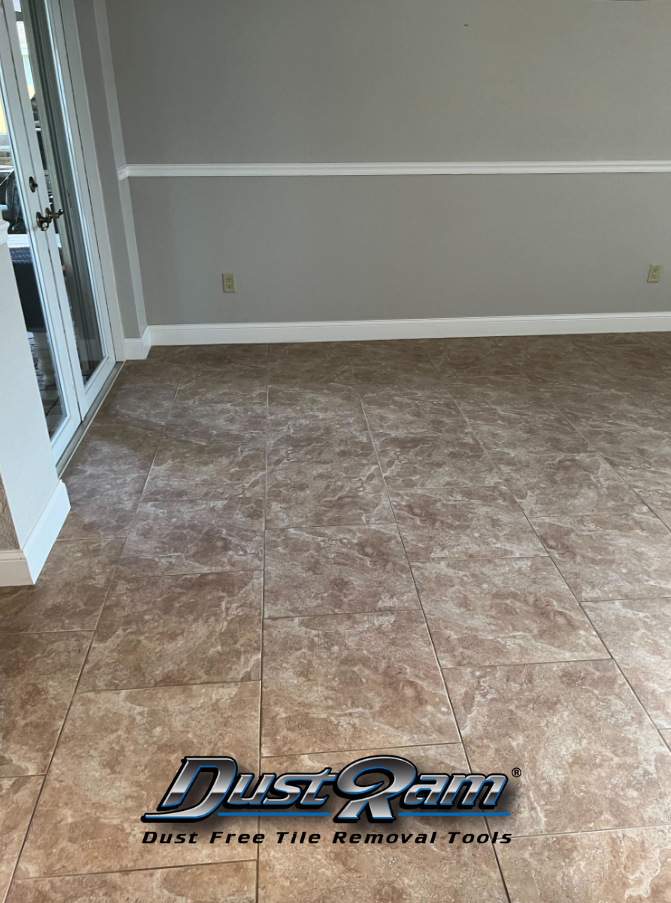
The dining room ended up being approximately 331 square feet of tile floor that need to be removed. The measurements for this area were as follows:

12’03 X 20’00

1’10 X 1’08

8’08 X 5’01

1’11 X 3’07

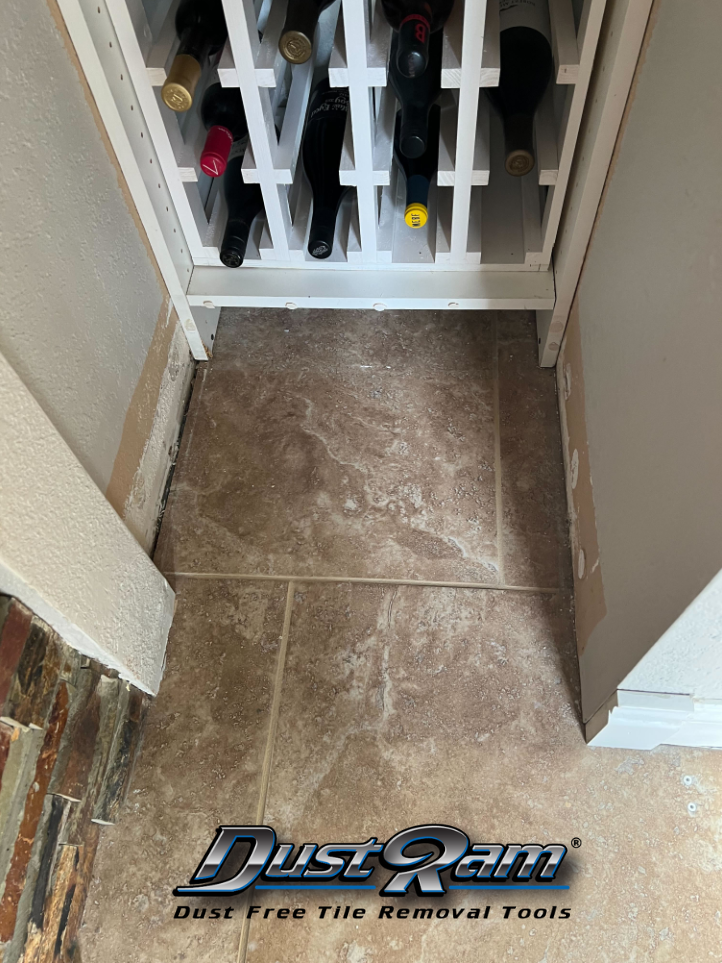
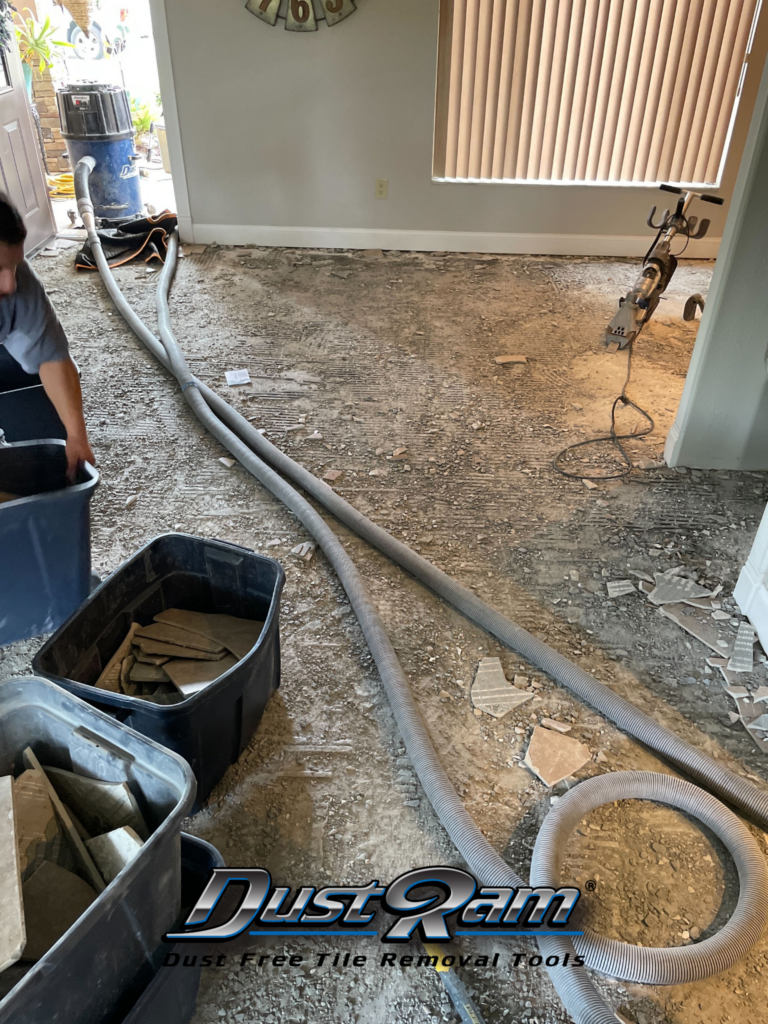
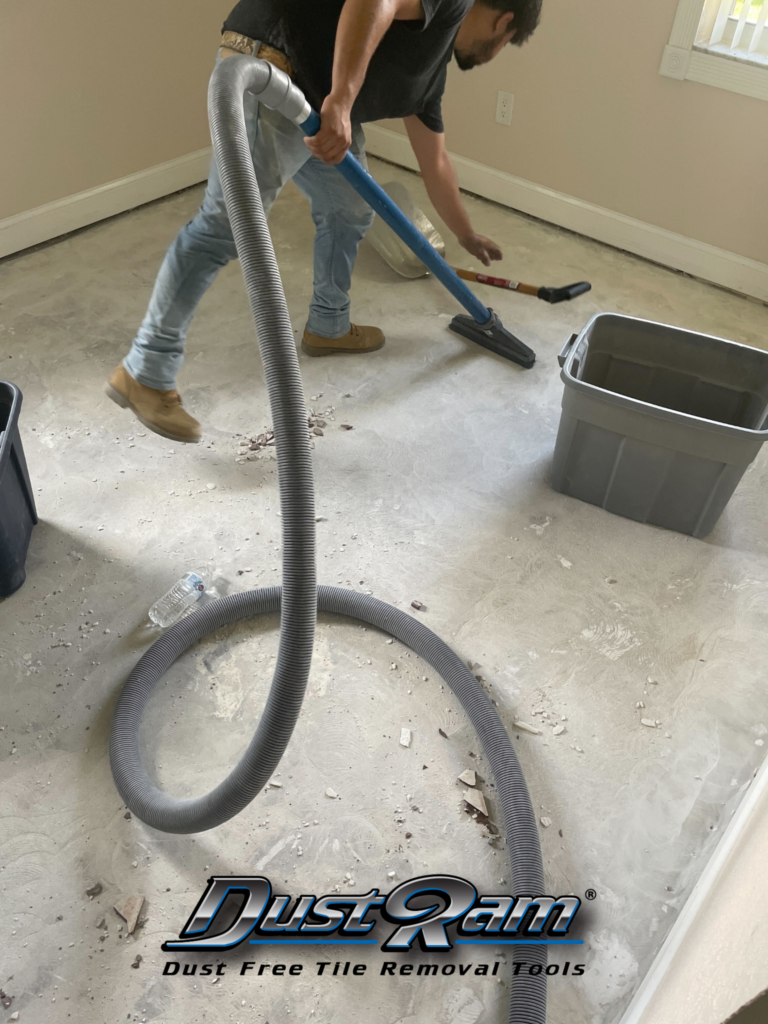
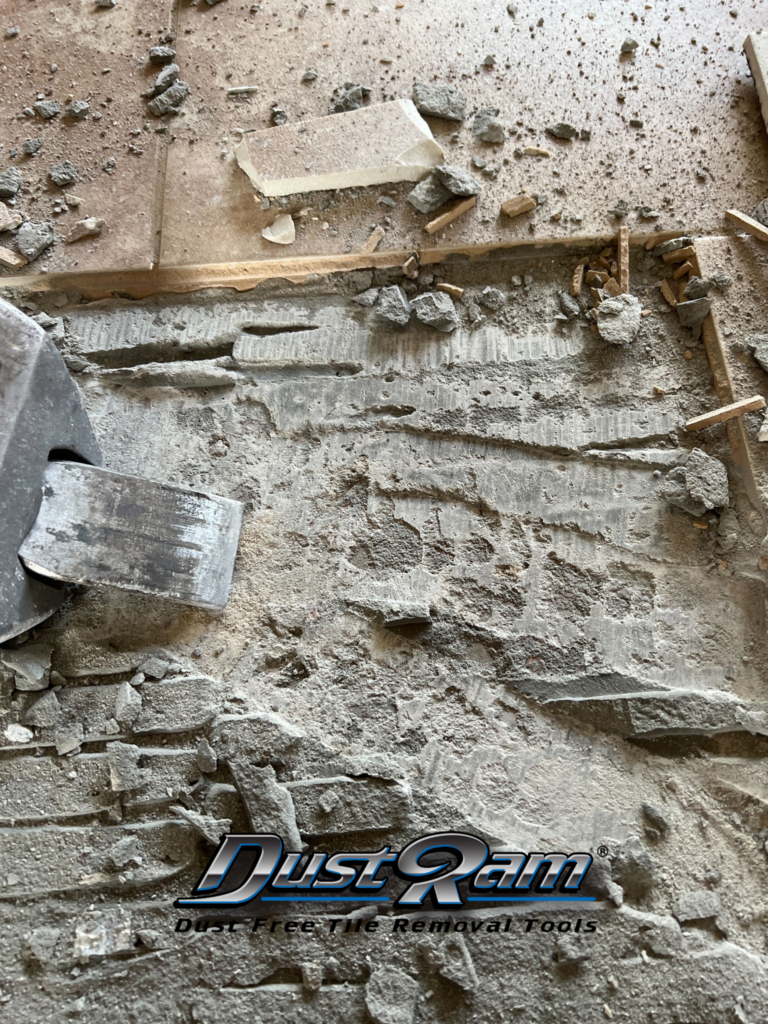
As we move through this case study, towards the middle you will see the rubble from the dust free tile removal. At the very end of our case study you’ll be able to see the end result and how smooth the subfloor is left through the use of our dust-free equipment. The flatness and smoothness of the concrete subfloor will be extremely noticeable and you will also be able to capture the essence of the quality of our work by getting a glimpse of the ground down thin-set and scarified concrete slab. Our mission at DustRam® is to provide you with top-rated and the best quality services in existence, completely dust free.

wine rack tile removal
flooring removal service near me
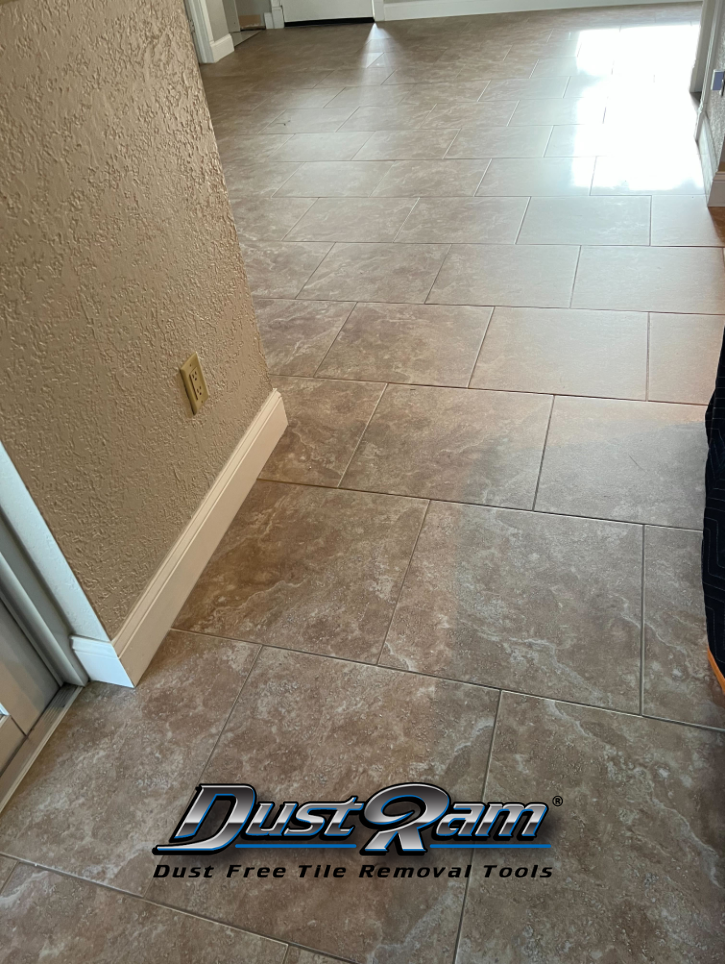
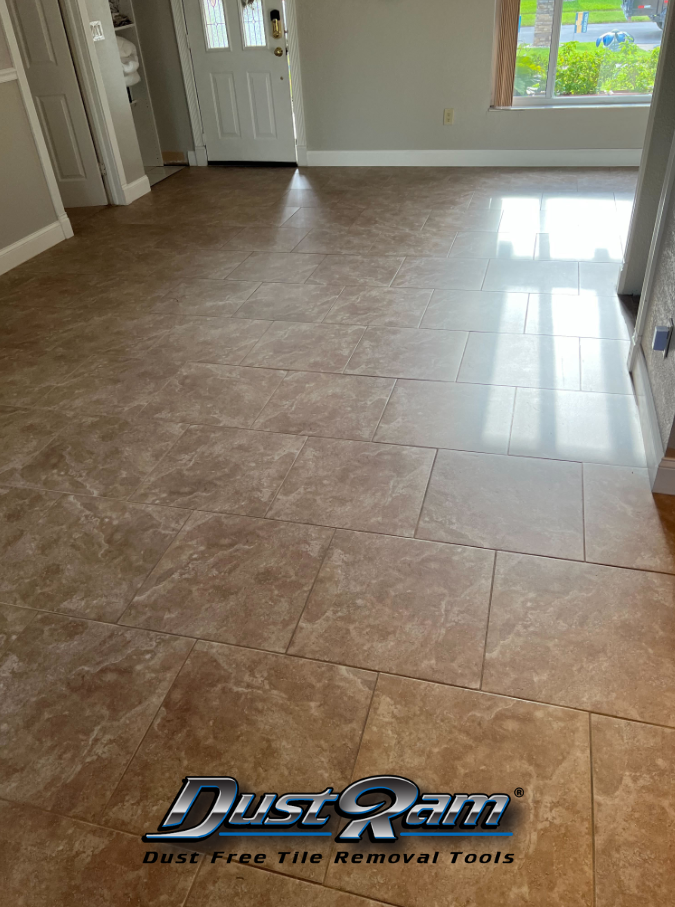
tile before flooring removal was performed

The Kitchen

kitchen before tile removal

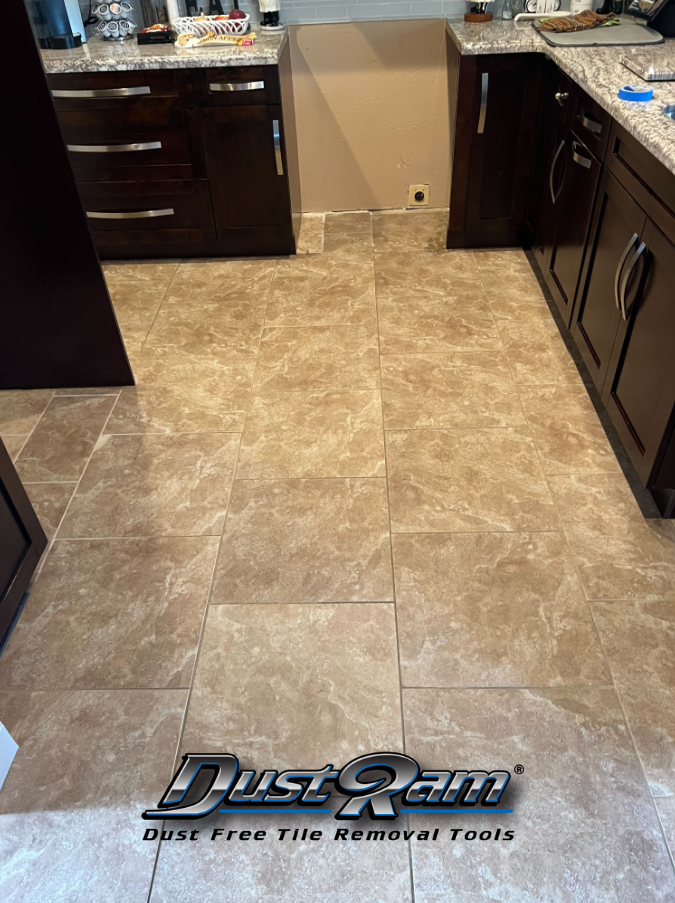
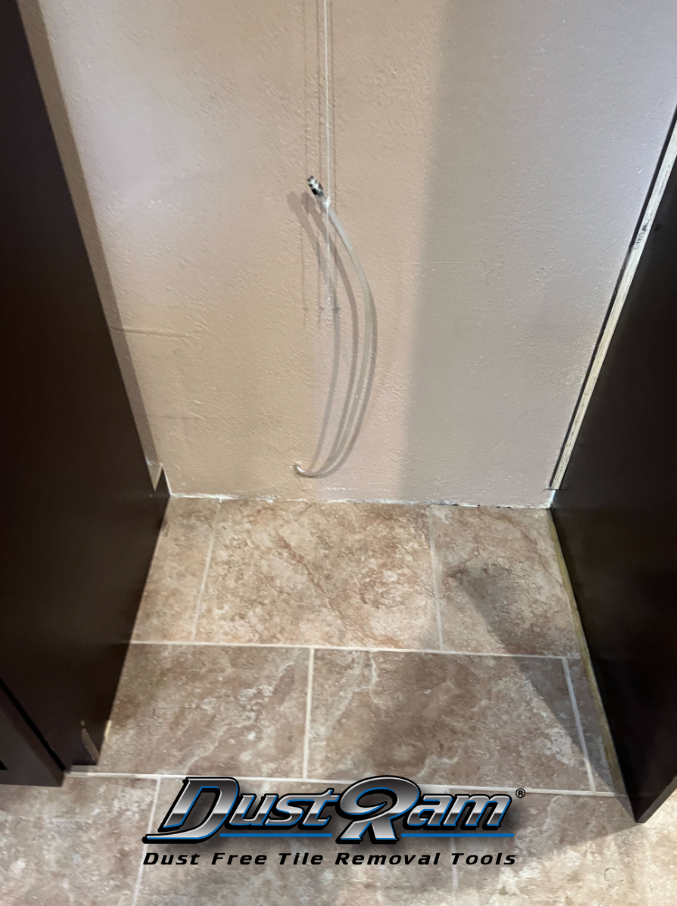
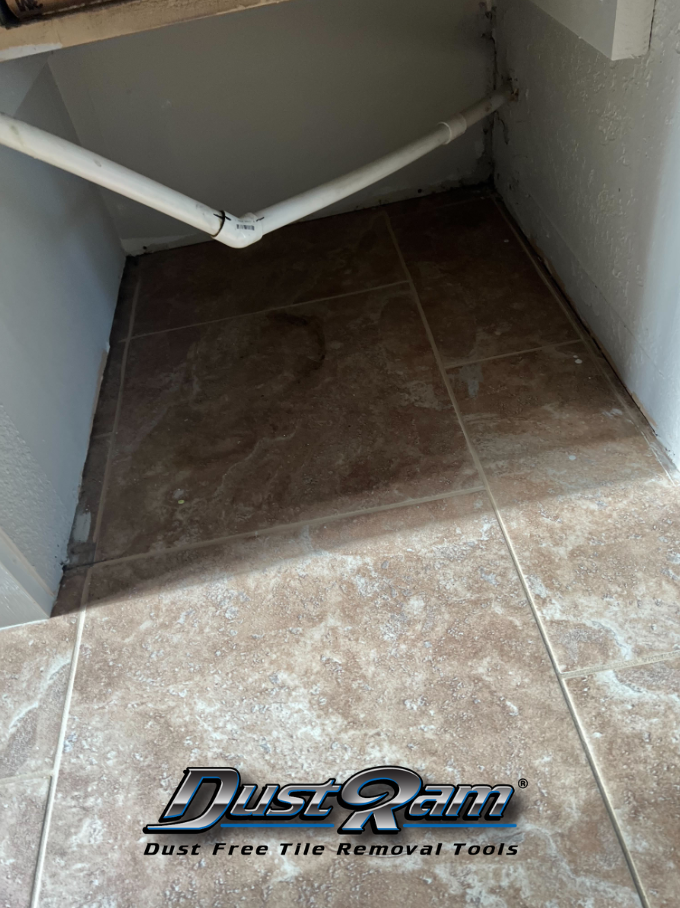
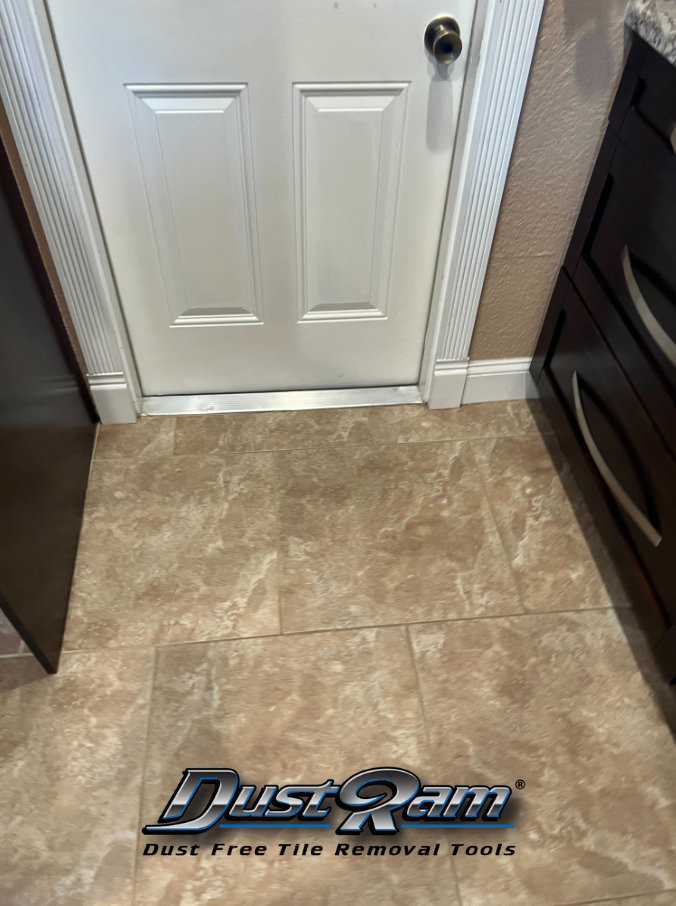
In the kitchen area, our crew was responsible for removing a combined total of 131 square feet which included a small pantry, a refrigerator area, and a walkway to the garage. The dimensions are as follows:

5’01 X 9’03

2’06 X 2’00

2’08 X 3’00

2’03 X 2’09

2’06 X 2’07

4’03 X 5’08

3’07 X 8’06

fridge area before tile was removed
tile floor
kitchen with tile floor intact

The Bedroom

tile floor in bedroom

The bedroom had 135 square feet of tile floor that needed to be removed. The dimensions here were:

10’02 X 12’05

3’00 X 2’06

During the Tile Removal

guys remjoving tile floor
dustram removing tile
ceramic tile removal rubble

After the Tile Removal

tile floor removal companies near me
floor removal company near me
kitchen tile removal near me

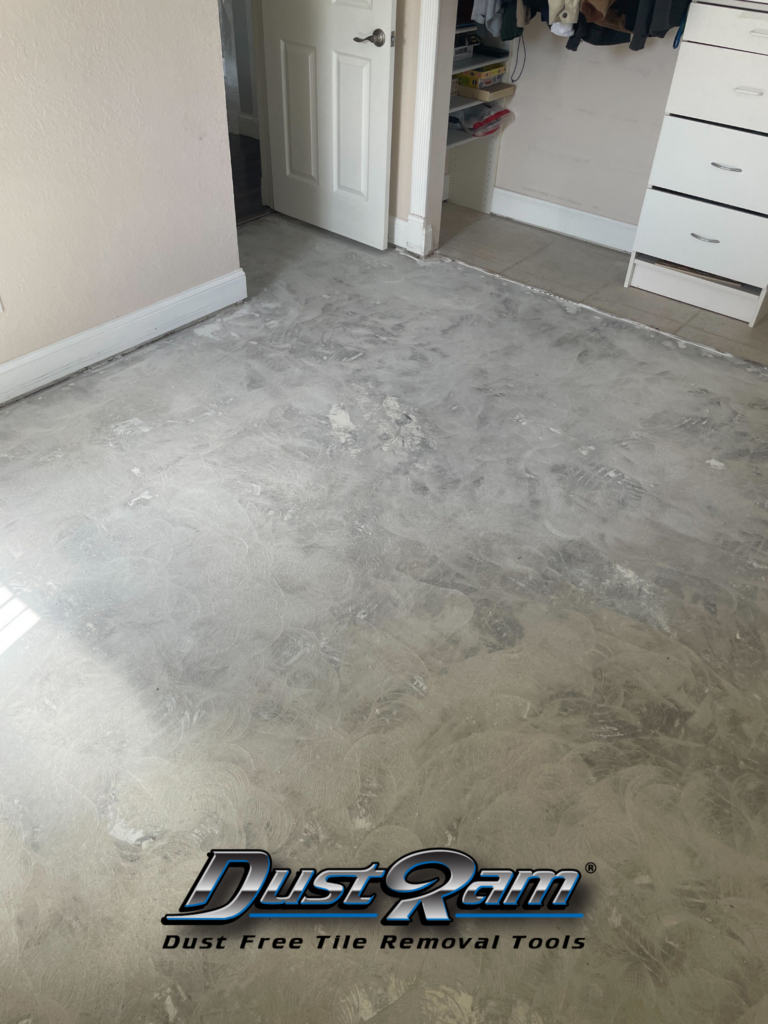
We want to point out that in the process of removing the tile using the DustRam® system, the thinset gets ground down to the concrete slab and we scarify it, which helps with better adhesion to the new floor. The subfloor is left in much better condition with our method than it would be if you hired a traditional or virtually dust-free contractor. 

The DustRam® dustless tile removal system captures the dust the instant it is produced and will never go airborne. Our crew disposes of cancer-causing silica dust far from your home. For more information about our truly dust-free tile removal service contact us today. You can also find a DustRam® certified contractor in your city, or visit our blog for the latest news and trends. 

Filed Under: Past Projects, Case Studies

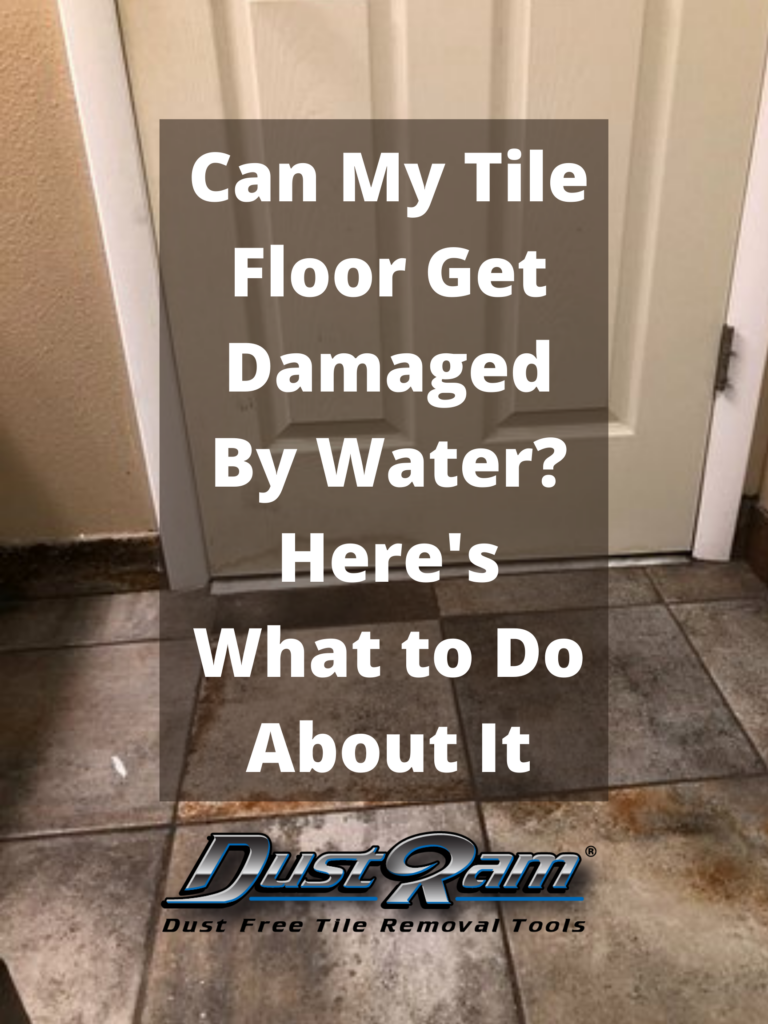
Can My Tile Flooring Get Water Damaged?

May 16, 2022 By DustRam® King of Dust Free Tile Removal 82 Comments

can my tile floor get water damaged

Photo Credit: Trip Advisor

Will Water Damage My Tile Flooring?

People consider tile as the most water-resistant flooring material, but do you know that the adhesive and grout that seal the tiles can get affected by water, thus damaging your floor? Standing water can seep through the tile and reduce the adhesive bond over time. The adhesive seal that cements the tile to the floor slowly deteriorates and you may notice that a few tiles are wobbling when you step on them.

Even though it may seem that only a few tiles are affected, the damage is usually much deeper than you think. In most cases, the entire surface underneath the floor gets affected. That means a flooring expert needs to rip off all the tiles, redo the floor, and install fresh tiles. Follow along with DustRam® for the inside scoop on water exposure and how it impacts your tile flooring.

https://www.dustram.com/blog/choosing-the-right-flooring/

Tile’s Water-Retaining Capacity

A tile’s water-retaining capacity depends on its density. How dense are the tiles installed on your floor? Are they travertine tile or porcelain tile? For example, travertine tile is not as dense as porcelain tile, and therefore, doesn’t have a high water-retaining capacity. It retains a significant amount of moisture and thus allows water to ooze through the substrate. Apart from the type of tile, the installation technique also contributes to the water-retaining capacity.

Floors with properly-installed tiles usually have a higher capacity to retain water. Therefore, you should make sure that you work with a dustless tile removal contractor and an experienced floor installation company that uses the latest machines to install the tiles on your floor.

https://www.dustram.com/blog/fix-broken-tiles/

Will Unsealed Grout Damage Tile Floors?

Grout ensures that each tile sticks to the floor properly. The floor installation experts seal the grout so that it doesn’t allow the tiles to wobble. However, amateurs who don’t have experience in tile installation may forget to seal the grout. Unsealed grout will make your tile floor vulnerable to water damage. Standing water underneath the floor will stain the grout, thus allowing bacteria and fungi to grow. They will soon develop mold spores and you will notice black stains on the corners of the tiles.

Floods are the Ultimate Enemy

Sometimes, floods can cause significant damage to your tile floor. If you don’t clear the water out soon, it will penetrate through the grout and affect the substrate. That’s why it is better to thoroughly dry and clean the floor to ensure that the standing water doesn’t affect the grout and adhesive underneath the tiles.

https://www.dustram.com/blog/signs-to-replace-your-flooring/

Identifying Water Damage on Tile Floors

How will you know whether there is water damage on your tile floor? It’s hard to tell just by looking at the floor from a distance. You need to inspect various tiles to check whether they are wobbling or if there are mold spores around the corner. Floor tiles usually become loose if your home was flooded due to rainwater.

Although ceramic tiles can withstand water for a long period, the adhesive and grout may become loose after a few months. On the other hand, a leaking pipe in the kitchen may drip water onto the floor. The tiles nearby may get affected due to this. The plywood or particleboard underneath the top surface would eventually cause dark stains or molds on the tiles. You would soon see the tiles becoming loose.

Videos – Past Projects – DustRam® Dust Free Tile Removal

Solution: Dealing with Water Damaged Tile?

How Neccessary Is Removing the Tile After Water Damage Has Occurred

One of the best ways to prevent water damage or repair the tiles after water damage is to rip all the tiles off, remove the water underneath, clean the entire surface, replace the particleboard, and use adhesive and grout to seal the tiles. Tile removal is a time-consuming job and may spread dust in your house. In fact, it’s not one of the safest jobs, especially with the amount of dust that emits while removing the tiles. But with time, the machines are now more advanced than ever.

Gone are the days when traditional tile removal involved creating a mess due to the dirt particles. It would also lead to respiratory problems, such as pulmonary fibrosis and silicosis, which eventually develops into lung cancer. Apart from the traditional tile removal technique, some companies also resort to virtually free tile removal. Although this is a slightly better method than the traditional technique, it is still not the safest. The experts use plastic and tapes to remove dirt particles. However, it’s not so effective since silica particles can travel easily into other rooms.

You may unknowingly breathe these particles that would eventually lead to breathing problems. Fortunately, we have come up with a different technique altogether that guarantees that there won’t be any dust particles left behind once we finish removing the tiles. Our dustless tile removal has already been tried and tested in various projects and it has worked wonders for us.

Dustless Tile Flooring Removal is the Safe Option

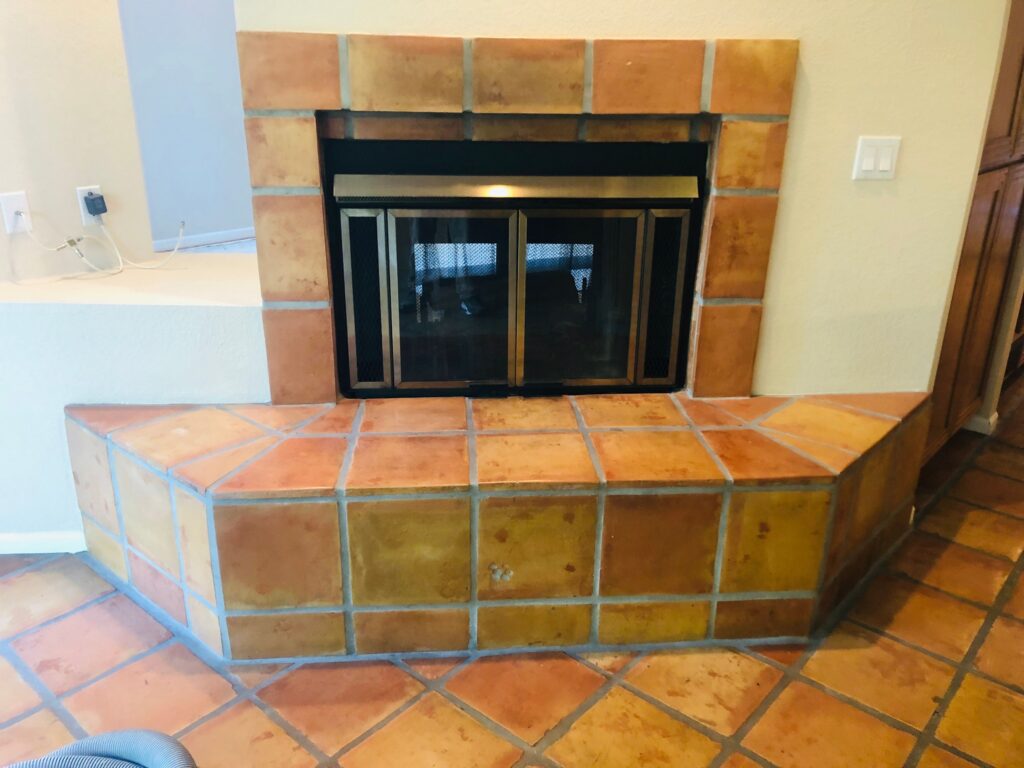
removal of tile from a fireplace
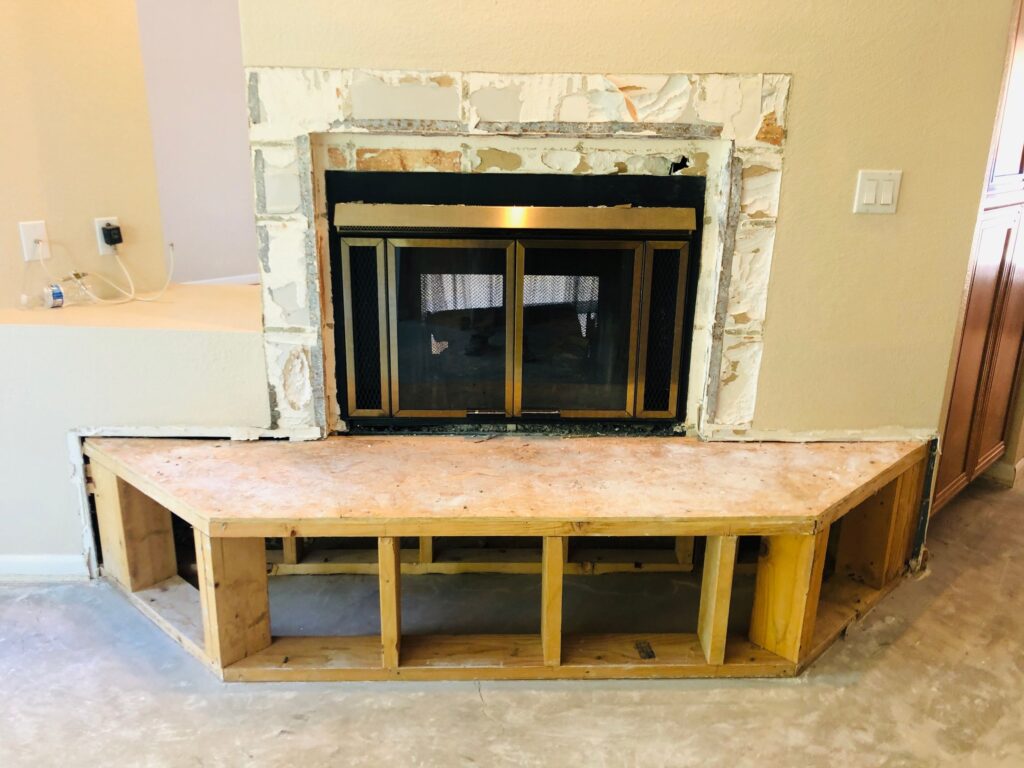
after dust free tile removal fireplace

Dust-free tile removal is the best technique to remove tiles if there is water damage underneath. It works on all tile floors, irrespective of the underlayment materials. Our tile removal method works on floors that have mason board, ceramic, stone, Saltillo, or cement underneath. It’s not only a safe method to remove tiles but also won’t allow the dust to settle down.

Over the years, it took us time to master this technique, but now, we are the experts in dustless tile removal. Our advanced tools are so efficient that they can remove tiles faster than virtually free tile removal or traditional tile removal methods. This means we not only save your valuable time to clean up the floor but also ensure that no one in your family has breathing troubles later.

https://www.dustram.com/blog/silica-dust-new-asbestos/

As already mentioned, respiratory diseases, such as silicosis or pulmonary fibrosis may lead to lung cancer later. Thankfully, the machine that we use chips, hammers, and grinds away the underlying thin-set mortar and tiles slowly and at the same time vacuums the dust particles that may emit while removing the tiles. This two-in-one technique prevents silica particles from flowing around in your house. It keeps your children, pets, and other family members safe from developing respiratory problems.

Therefore, if you notice that water has damaged your tile floor and you need an expert to remove the tiles, don’t hesitate to contact us. Our dust-free tile removal will get rid of the tiles swiftly without creating a mess in your house. For more on water damage and how it will affect your flooring, visit our blog. We cover the latest news and trends on flooring and dust free tile removal. 
Filed Under: Flooring

  • « Previous Page
  • 1
  • 2
  • 3
  • 4
  • 5
  • Next Page »

Call Us Today

1.844.DUSTRAM

Quick Links

  • Dust Dangers
  • DustRam® Tools
  • Get DustRam® Certified
  • Terms & Conditions
  • DustRam Versus Competitor

Locations

  • Find a Contractor

Follow Us

  • Instagram
  • Twitter
  • Tumblr
  • YouTube
  • Facebook

Copyright © 2026 DustRam • All Rights Reserved - Dust Free Tile Removal | The material on this website cannot be distributed, reproduced, cached, transmitted, and or otherwise used. You need written permission from DustRam®